
Support our independent tech coverage. Chrome Unboxed is written by real people, for real people—not search algorithms. Join Chrome Unboxed Plus for just $2 a month to get an ad-free experience, access to our private Discord, and more. Learn more about membership here.
START FREE TRIAL (MONTHLY)START FREE TRIAL (ANNUAL)
We are officially two weeks away from Google’s dedicated media preview event in New York City on September 15, and the excitement around here is at an all-time high. For months, I have been digging through Chromium Gerrit commits, checking hardware benchmarks, and talking with Google leadership to piece together what Google is building and what we should expect to see in two weeks.
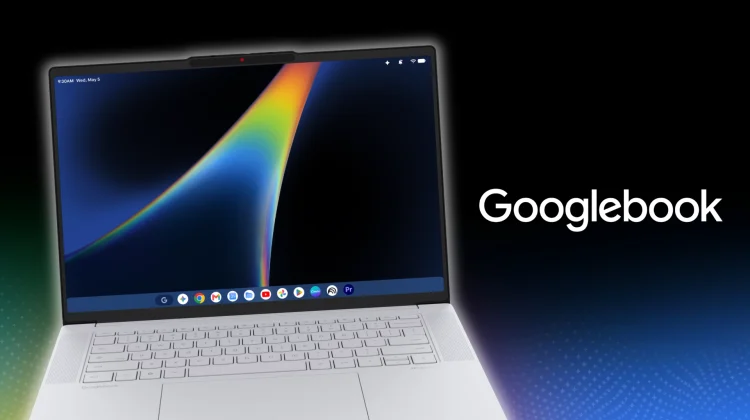
If you are just now tuning in or trying to make sense of all the rumors, code names, and leaked specs, consider this your ultimate catch-up guide. Here is everything we know so far about Googlebook, the new operating system, and the massive wave of hardware arriving in two weeks.
What is Googlebook, and why is it such a big deal?
At its core, Googlebook represents the biggest architectural pivot in Google’s computing history since the introduction of ChromeOS 15 years ago.
- The Android foundation: Instead of running ChromeOS with Android bolted on inside a virtualized container (ARCVM), Googlebook is built directly on top of a unified Android OS foundation while retaining a full, uncompromised desktop Google Chrome browser.
- Native Android apps without the friction: For years, running Android apps on Chromebooks felt like a compromise due to virtualization overhead, sluggish file sharing, and window-resizing glitches. On Googlebook, Android apps will run natively as first-class desktop citizens with instant launching, zero emulation penalty, and direct GPU access.
- Desktop-class Chrome: You aren’t getting a mobile browser experience. Googlebook includes the full desktop version of Chrome with complete extension support, developer tools, and multi-window workflows.
- The OS naming question: While the platform and devices are called Googlebook, the underlying operating system has been referenced internally in code as Aluminium OS. We expect Google to clarify the consumer branding on stage in NYC.
What makes a laptop a Googlebook?
Google isn’t just releasing new software; it is working with top PC manufacturers to establish a premium hardware baseline that rivals modern MacBooks and Windows Copilot+ PCs:
- The return of the Glowbar: In our interview with Google VP John Maletis, he explained why Googlebook is resurrecting the iconic four-color light bar from the original Chromebook Pixel. Rebranded as the Glowbar, this exterior lid light provides glanceable battery level checks and subtle ambient pulses when Gemini is active…and hopefully more!
- 16:10 displays across the fleet: Every single clamshell and convertible laptop leaked so far sports a taller 16:10 aspect ratio, with many flagships featuring 2.8K OLED and high-refresh-rate panels.
- Dedicated AI keys & audio arrays: Keyboards feature dedicated hardware AI keys for instant Gemini summoning, paired with studio-grade dual far-field microphone arrays for hands-free ambient voice commands.
- High-end chassis materials: Expect ultra-lightweight magnesium-aluminum unibodies, ceramic-alloy chassis, large glass haptic touchpads, and fingerprint power buttons.
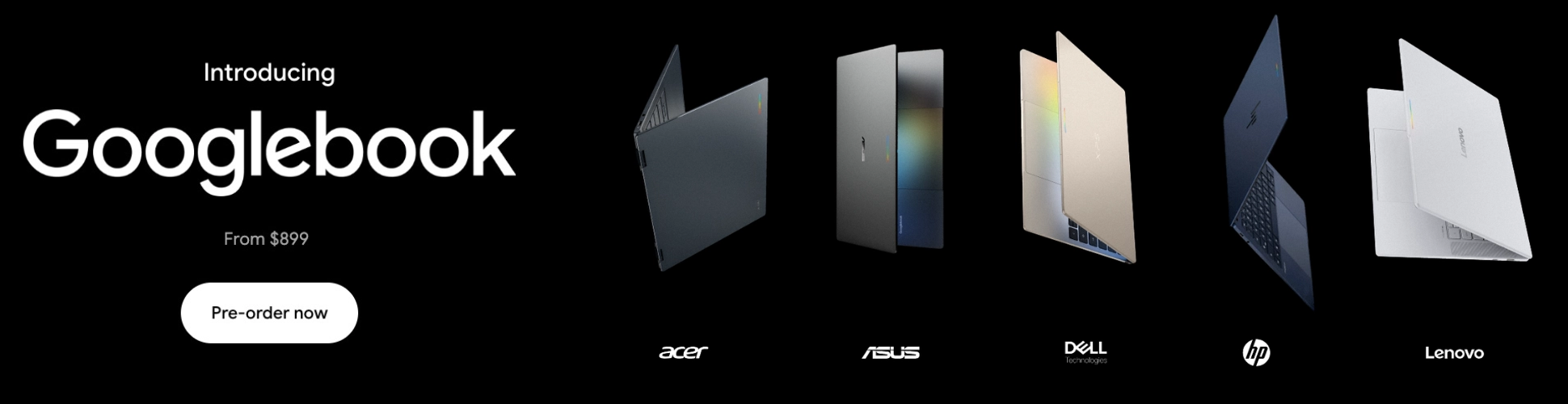
The leaked hardware fleet from Acer, ASUS, Dell, HP, and Lenovo
As I discussed in our breakdown of why Googlebook’s launch lineup is unlike anything in laptop history, Google is skipping the traditional budget trial phase and debuting with an unprecedented high-end, multi-OEM lineup that leverages both ARM and x86 silicon along with the iconic Glowbar on each lid:
- Dell XPS 13 Googlebook (“Mica” / DX13267): Spotted across Geekbench and Chromium code, Dell’s initial flagship is built directly on the XPS 13 platform. It packs Qualcomm’s 12-core Snapdragon X Elite (X1E-80-100) processor, a 13.4-inch OLED touch panel (2880 × 1800 resolution), 16GB or 32GB of LPDDR5X RAM, and dual USB-C ports.
- ASUS Googlebook CX9406: Uncovered through early regulatory filings and retail discoveries, this ultra-portable features a sub-1kg (2.2 lbs) ceramic-alloy chassis, Intel’s next-gen Panther Lake silicon, and a 14-inch OLED display. While early leaks highlighted an enthusiast configuration scaling up to 64GB of RAM, retail listings confirm more accessible models starting with an Intel Core Ultra 5 and 16GB of RAM.
- Acer Googlebook 14 (“Moonstone” / GP714-91N): Confirmed via European retail database listings and Gerrit commits, Acer is bringing its premium laptop DNA to Googlebook with an Intel Panther Lake processor and a 14-inch OLED display.
- HP Googlebook 14c (“Quartz”): Spotted in Bluetooth SIG certifications and Geekbench tests under regulatory ID TPN-H111, HP’s 14-inch 16:10 convertible combines Qualcomm’s 12-core Snapdragon X Elite (X1E-80-100) chip, up to 32GB of RAM, Wi-Fi 7, and a 360-degree 2-in-1 hinge.
- Lenovo Googlebook Duet m (“Sapphire”): Officially named in Bluetooth SIG filings, this is the lone detachable tablet currently tracked in the first wave. It features a 13-inch OLED display, a MediaTek Dimensity processor, quad speakers, wirelessly charging USI pen, and an included kickstand and keyboard folio.
- Mainstream tiers (“Annite” and “Pic”): While premium flagships lead the initial wave, Chromium Gerrit commits for the ‘Bluey’ reference family reveal that Dell is also preparing more affordable devices powered by the 8-core Snapdragon X Plus (X1P-42-100) to support Google’s broader multi-tier hardware strategy.
What about existing Chromebooks and ChromeOS?
One of the biggest questions readers ask is what this means for their current hardware. Here is how Google is positioning the ecosystem as we move into the Googlebook era:
- Chromebooks aren’t disappearing overnight: Standard Chromebooks and Chromebook Plus devices will continue to be sold, supported, and updated for many years to come.
- Chromebooks still have a place: Chromebooks and ChromeOS Flex will remain the go-to lightweight solution for budget-friendly classroom fleets and legacy hardware conversions, while Googlebook will serve as Google’s flagship consumer and pro-tier computing platform.
- A clear upgrade path: Existing Chromebook hardware that meets the Googlebook spec will get the option to upgrade to the new OS at some point in the future. Google hasn’t clarified when that will happen, however.
What I’m eager to see at the September 15 media event
When I sit down in the keynote room in New York City in two weeks, here are the three biggest answers I’ll be looking for:
- Official pricing and release dates: Will these machines hit retail shelves immediately in late September, or are we looking at an October/November rollout?
- The OS: How polished is the desktop windowing, external multi-monitor support, and Android app scaling in real-world use? And what will they end up calling it?
- Big apps at launch: Google has said big app developers are already on board for Googlebook, but the specifics are still unknown. Launching with desktop-class software will be key to Googlebook’s success.
It goes without saying that we’re incredibly excited for September 15th, and we’ll be sharing hands-on impressions, analysis, and video coverage of everything we learn the moment we’re allowed to. Stay tuned!
SUBSCRIBE TO UPSTREAM
Get Chrome Unboxed delivered straight to your inbox
Upstream is our flagship, curated newsletter with the top stories, most click-worthy deals, giveaways, and trending articles from Chrome Unboxed sent directly to your inbox a few times a week. Join 31,000+ subscribers.

