
Support our independent tech coverage. Chrome Unboxed is written by real people, for real people—not search algorithms. Join Chrome Unboxed Plus for just $2 a month to get an ad-free experience, access to our private Discord, and more. Learn more about membership here.
START FREE TRIAL (MONTHLY)START FREE TRIAL (ANNUAL)
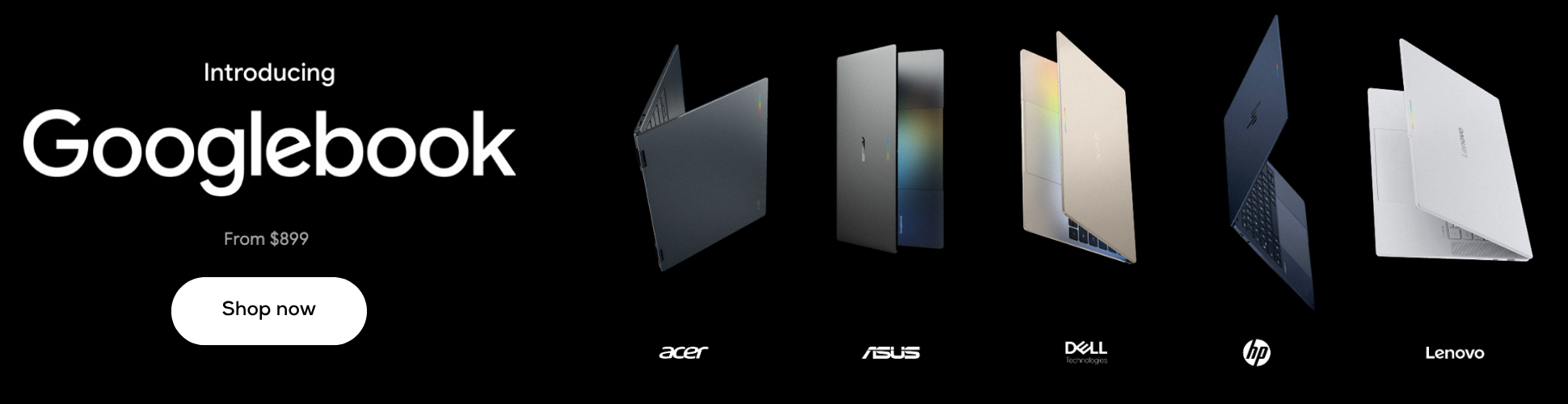
As we continue to track the Googlebook devices currently in development ahead of Google’s expected fall launch window, watching the hardware picture come into focus has been pretty fascinating. While Lenovo stepped into the spotlight first with leaked marketing renders for its 13-inch ‘Sapphire’ detachable and Googlebook 15 laptop, the remaining launch partners are rapidly surfacing through regulatory databases, hardware certifications, and benchmark runs. And of those hardware launch partners, none is more exciting than the return of Dell.
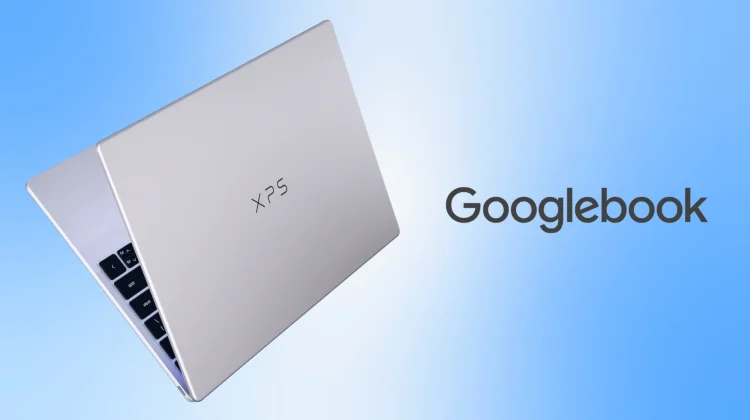
While Dell has built excellent enterprise-focused Chromebooks over the years, the company largely stepped back from releasing consumer-focused laptops running ChromeOS. But recent Geekbench 6 discoveries unearthed by GBookHub confirm that Dell isn’t just returning to the consumer Google desktop space for Googlebook – it is bringing its most iconic consumer brand along for the ride.
‘Mica’ is the Dell XPS 13 (DX13267)
Unmasking unreleased hardware usually requires piecing together some technical breadcrumbs, and that’s precisely how Dell’s upcoming Googlebook showed up.
Initially, we spotted a new board codenamed ‘Mica’ undergoing work in the Chromium Gerrit. ‘Mica’ belongs to the ‘Bluey’ reference board family – Qualcomm’s baseboard architecture designed for Snapdragon X-series Googlebooks. Early code changes pointed toward a Dell origin thanks to power management and battery health code base directly mirroring Dell’s proprietary firmware structures.
The primary proof arrived when multiple benchmark runs surfaced on Geekbench 6 under the explicit model identifier “Dell XPS 13 (DX13267)” (alongside alias listings like “Google Multi-device ARM64”).
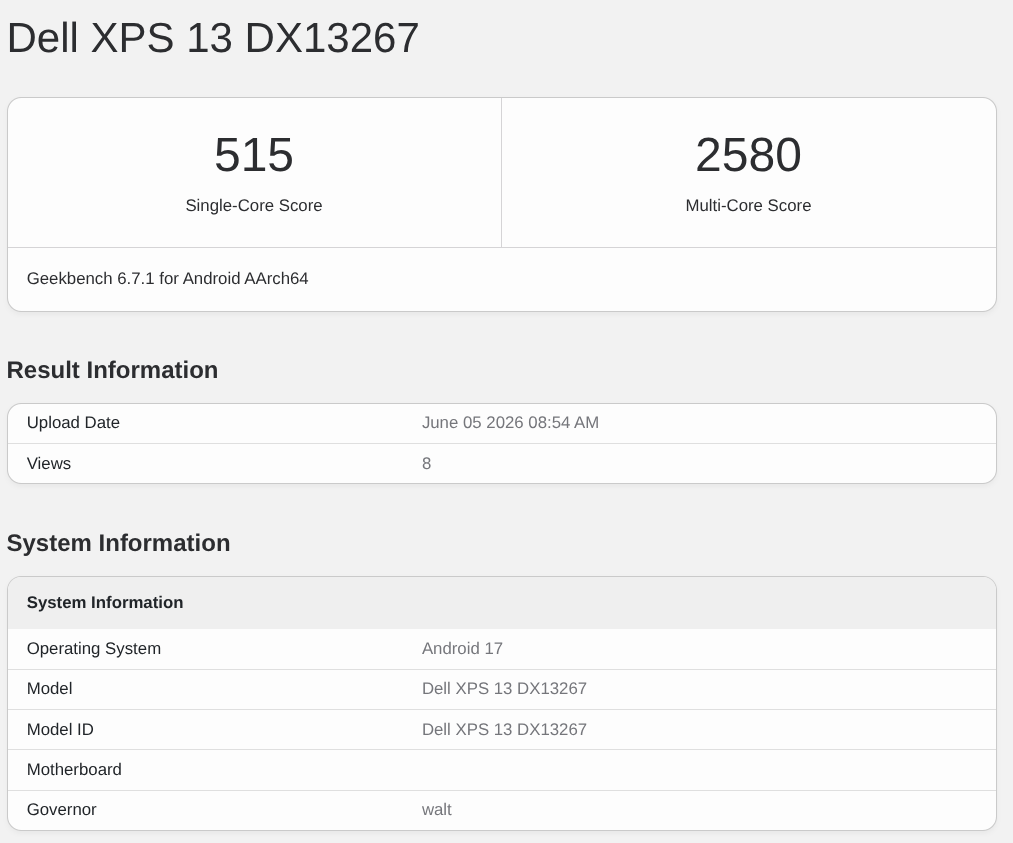
Deep within the software thumbprints of those benchmark runs, there are references to mica-userdebug tied to an active Android 17 desktop build (CL2B.260330.081). That build string definitively linked the internal ‘Mica’ board directly to the retail Dell XPS 13 (DX13267) hardware.
Snapdragon X Elite & OLED display
Looking at the model designation itself, DX13267 sits right next to Dell’s Windows-based XPS 13 (DX13260). This strongly implies that Dell is utilizing its ultra-premium 13-inch chassis design to house Google’s new desktop platform. Based on the benchmark data and existing supply chain logs, here is what we expect from the hardware configuration so far:
- Processor: Qualcomm Snapdragon X Elite (X1E-80-100)
- Local NPU Performance: 45 TOPS Hexagon NPU for local AI execution
- Memory Configurations: 16GB or 32GB LPDDR5X RAM
- Display: 13.4-inch OLED touch panel (2880 × 1800 resolution)
- Connectivity & I/O: Wi-Fi 7, Bluetooth, and dual USB-C ports
- Googlebook Features: Integrated lid Glow Bar and dedicated biometric security
Early benchmark tests reveal single-core scores hovering around 2,200 and multi-core scores pushing past 9,500 on Geekbench 6. While software optimization is ongoing as Google tunes Android 17 (“Aluminium OS”) for desktop windowing, pairing 12-core Snapdragon X Elite silicon with up to 32GB of RAM guarantees that Dell’s Googlebook will deliver flagship-class performance.
Why an XPS Googlebook is a huge milestone
For years, ChromeOS enthusiasts like me held out hope that Dell might bring its flagship XPS lineup over to Google’s desktop ecosystem. Instead, Dell kept XPS exclusively on Windows and Linux, reserving its Google OS efforts for education and enterprise Latitude lines.
Seeing Dell position its upcoming Googlebook under the XPS banner signals a major shift in how OEMs view the platform. Google’s strict baseline hardware standards are giving hardware partners the confidence to bring their top-tier consumer designs to the table, and it is incredibly exciting to see.
While Dell’s final retail branding will likely incorporate “Googlebook” into the official name, having XPS-grade craftsmanship powered by Snapdragon X Elite silicon is incredible news for anyone wanting a true ultraportable workstation, and we can’t wait to see it in the flesh very soon!
SUBSCRIBE TO UPSTREAM
Get Chrome Unboxed delivered straight to your inbox
Upstream is our flagship, curated newsletter with the top stories, most click-worthy deals, giveaways, and trending articles from Chrome Unboxed sent directly to your inbox a few times a week. Join 31,000+ subscribers.

