

Support our independent tech coverage. Chrome Unboxed is written by real people, for real people—not search algorithms. Join Chrome Unboxed Plus for just $2 a month to get an ad-free experience, access to our private Discord, and more. Learn more about membership here.
START FREE TRIAL (MONTHLY)START FREE TRIAL (ANNUAL)
Over the past month, I’ve spent a lot of time with Googlebook and Googlebook OS. I intentionally avoided rushing out a knee-jerk, hot-take review when things weren’t quite as good as I hoped they would be; but quite quickly, the broader tech media immediately jumped into a pile-on, framing Googlebook as a total disaster. Having spent weeks living inside this ecosystem across devices like the Lenovo Googlebook 15 and Dell XPS Googlebook, the reality is far more nuanced, however..
In our latest video, I sat down for an unscripted, completely honest conversation covering every angle of where Googlebook stands today. There are very legitimate daily friction points that drive me crazy as a seasoned Chromebook power user. Yet at the exact same time, I see a platform with a ridiculously high ceiling that is evolving very rapidly.
Generally speaking, I think the conversation around these devices has suffered from a fundamental framing error. If you look at Googlebook through the lens of trying to replace a 16-inch MacBook Pro, you are setting yourself up for disappointment. But when you examine it for what it truly is – the high-ceiling heir apparent to Chromebook – it becomes clear why Googlebook deserves a little patience while Google irons out the growing pains.
Gorgeous hardware and fantastic phone cohesion
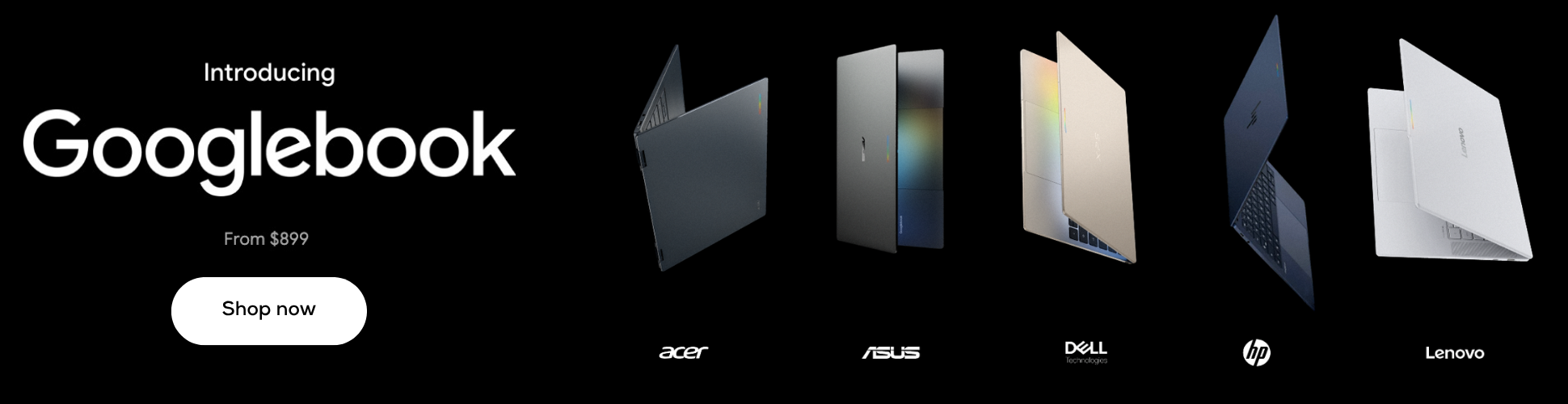
From a purely physical standpoint, Google and its OEM partners knocked it out of the park. Across the entire launch lineup, the hardware quality is exceptional: crisp, high-refresh OLED panels, rigid chassis builds with effortless one-finger opening, tactile keyboards, and responsive haptic trackpads. The devices feel genuinely premium in the hand.
That hardware excellence is paired with an interface that brings the best of Google’s Pixel design language to the desktop. The UI fluidity, subtle bounce physics, desktop widgets, and system animations make opening folders and organizing app grids feel delightfully polished.
Where Googlebook immediately outshines traditional desktops, however, is seamless mobile integration with Android devices. I’ve done all of my initial testing alongside my daily driver Samsung Galaxy Z Fold 8 and a Pixel 11 Pro XL and both are full supported with all the genuinely useful perks you get when using a Googlebook with an Android phone.
While app streaming is helpful when you need to mirror you phone directly on the desktop, I found the shared file systems incredibly productive and the Continue On abilities surprisingly helpful when moving between my phone and the desktop. Along with smaller niceties like notification sync, automatic hotspot, and Wi-Fi network sharing, Googlebook really does make a fantastic companion for Android smartphone users.
Where Googlebook frustrates Chromebook veterans
The overall experience, however, isn’t all unicorns and rainbows. High-end hardware priced north of $1,000 cannot get a free pass when basic software productivity suffers some serious regressions. The biggest irony of Googlebook OS is that while it elevates mobile integration, it inexplicably abandoned several rock-solid desktop capabilities that ChromeOS spent a decade perfecting.
The friction begins with the browser itself. Because Chrome on Googlebook OS is architected atop an Android foundation rather than standard desktop binaries, early adopters encountered annoying quirks: erratic tab closing behaviors, wonky DevTools that float in detached windows rather than docking natively to the side, missing split-tab functionality, and broken tab group sync. While the arrival of Chrome 156 delivered key upgrades and a recent build finally put an end to the frustrating PWA window flickering bug, day-one users shouldn’t have had to wait for essential, already-tested browser features.
Even more glaring are desktop window management issues. ChromeOS set a high standard for workspace organization, yet one of my biggest Googlebook gripes remains the overly basic virtual desks feature. You cannot drag windows between desks in overview mode, you cannot reorder or label desks, and trackpad gestures between spaces is basically non-existent.
Similarly, the native Files app completely lacks a collapsible directory tree in the left navigation pane, making deep folder navigation unnecessarily clumsy. The system clipboard history strips rich formatting and markdown on secondary items, morning notifications spam users with alerts already cleared on your phone, and the Chrome profile switcher currently refuses to support multi-account desktop profiles. For anyone moving over from an established Chromebook setup, it feels like Googlebooks left too much of ChromeOS behind.
Why the framing matters
A massive portion of the negative sentiment surrounding Googlebook stems from tech reviewers evaluating these machines as direct drop-in competitors to MacBooks and high-end Windows laptops. When someone accustomed to legacy desktop platforms opens an expensive laptop and cannot install Adobe Premiere Pro, native Final Cut, or legacy x86 executables, their immediate reaction is that the device is compromised.
As Joe and I discussed recently, that same reviewer would likely have had an identical reaction if handed our favorite Chromebook Plus 14 without prior context. The issue isn’t simply Googlebook; it is the lingering culture shock of transitioning from legacy desktop software to modern, cloud-first workflows built around powerful PWAs and responsive mobile ecosystems.
Google compounded this misunderstanding during the original rollout. As I argued recently, Googlebook should have been framed as the Chromebook successor, not a MacBook rival. Had Google stepped on stage and explicitly stated that Googlebook represents the next evolutionary phase of web computing – built on a unified Android platform that scales cleanly from ultra-light laptops to future detachable form factors like the upcoming Lenovo Googlebook Duet M – expectations would have aligned more closely with reality.
Google’s rapid update cadence with bi-weekly Chrome releases and swift OS patches indicates that the gap between ChromeOS desktop utility and Googlebook will shrink drastically over the coming months. If your daily productivity demands massive local rendering suites or legacy Windows enterprise tools, this was never meant to be your machine. But if you already live in modern web apps, rely heavily on cloud architecture, and want premium hardware that talks to your phone better than anything on the market, Googlebook’s trajectory is headed in the exact right direction.
SUBSCRIBE TO UPSTREAM
Get Chrome Unboxed delivered straight to your inbox
Upstream is our flagship, curated newsletter with the top stories, most click-worthy deals, giveaways, and trending articles from Chrome Unboxed sent directly to your inbox a few times a week. Join 31,000+ subscribers.

