

Support our independent tech coverage. Chrome Unboxed is written by real people, for real people—not search algorithms. Join Chrome Unboxed Plus for just $2 a month to get an ad-free experience, access to our private Discord, and more. Learn more about membership here.
START FREE TRIAL (MONTHLY)START FREE TRIAL (ANNUAL)
Over the last few weeks, the initial Googlebook leaks have centered heavily on what will likely turn out being higher-end, more expensive hardware. From Intel Panther Lake in the ASUS CX9406 and Acer Googlebook 14 to 12-core Snapdragon X Elite chips in the HP Googlebook 14c and Dell XPS 13, there’s no question that early comments from our conversation with Google VP John Maletis about the level of launch hardware for Googlebook were spot on.
While those premium machines make for great headlines and make us here at Chrome Unboxed quite excited, Google’s new desktop ecosystem will eventually need to reach outside the high-end bracket to capture more mainstream buyers. Thanks to some fresh new finds in the Chromium Gerrit, we now have our first look at how part of that broader device strategy will play out.
Two new development boards codenamed ‘Annite’ and ‘Pic’ have surfaced, revealing that Qualcomm’s Snapdragon X Plus is officially joining the Googlebook family, and the underlying code points to an expanded lineup from Dell.
The ‘Bluey’ family splits into Elite and Plus tiers
According to code analysis from GbookHub, Qualcomm’s primary Googlebook reference platform, codenamed ‘Bluey’, has officially branched into two distinct hardware tracks:
- ‘BlueyH’ (Premium Tier): Configured around Qualcomm’s “Hamoa” architecture, which powers the 12-core Snapdragon X Elite (X1E-80-100) found in HP’s Googlebook 14c and Dell’s XPS Googlebook.
- ‘Bluey’ (Mass Premium Tier): Configured specifically for the 8-core Snapdragon X Plus (X1P-42-100), serving as the foundation for ‘Annite’ and ‘Pic’.
Seeing explicit board configs added for the X1P-42-100 proves that Google and Qualcomm are actively engineering machines designed to hit a likely sweet-spot of $599 to $799 rather than restricting the platform to higher-end, more expensive hardware.
What Gerrit commits tell us about Dell’s plans
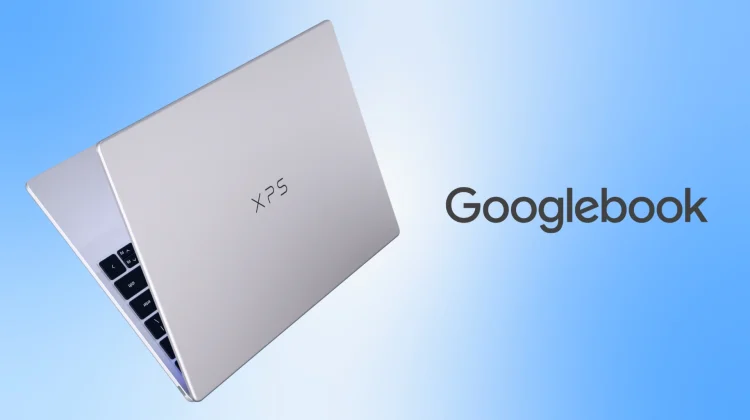
What makes ‘Annite’ and ‘Pic’ especially interesting is their relationship to other devices we’ve been tracking. In the Chromium Gerrit, both of these new boards were constructed by directly cloning the repository of Dell’s ‘Mica’ baseboard (the board behind the upcoming Snapdragon-powered Dell XPS 13 Googlebook).
While they share the same architectural roots as ‘Mica’, developers have made specific hardware modifications in the firmware:
- Adjusted clock speeds: The motherboard base clock has been reduced from 100 MHz down to 75 MHz to match the power envelope of the Snapdragon X Plus.
- Retained XPS-style chassis traits: Both boards carry over key ‘Mica’ hardware descriptors, including an integrated fingerprint sensor and an all-USB-C port layout with no legacy USB-A ports.
- 8-core Oryon CPU cluster: Delivering snappy day-to-day multitasking and exceptional battery efficiency without the thermal demands of a 12-core die.
Dell’s multi-device strategy: XPS 13 at the top, Inspiron in the middle?
Seeing Dell’s baseboard blueprint spawn two distinct Snapdragon X Plus derivatives suggests Dell isn’t just dipping a single toe into the Googlebook waters with a single XPS model.
Instead, Dell appears to be building a cohesive family of ARM-powered Googlebooks. While ‘Mica’ anchors the ultra-premium tier with a 12-core Snapdragon X Elite and an OLED panel, ‘Annite’ and ‘Pic’ look like the foundation for more affordable companion devices: potentially reviving familiar Dell consumer branding like Inspiron or Latitude for the Googlebook era.
Full 45 TOPS NPU power without the flagship price tag
The best part about seeing the Snapdragon X Plus enter the Googlebook lineup is that users won’t have to sacrifice on-device AI capabilities to save money.
Qualcomm kept the exact same 45 TOPS Hexagon NPU inside the Snapdragon X Plus as its top-tier Elite sibling. That means ‘Annite’ and ‘Pic’ will handle local Gemini features like screen reasoning, Magic Pointer cursor context, and real-time audio transcription with the exact same speed and responsiveness as a $1000+ flagship.
A complete hardware ecosystem is coming into focus
When Google announced Googlebook back in May, the big question was whether we’d see a healthy range of hardware choices or just a handful of expensive showcase laptops.
Watching Dell expand its Gerrit footprint from the flagship ‘Mica’ to the Snapdragon X Plus-powered ‘Annite’ and ‘Pic’ shows that OEM partners are planning for serious volume across multiple price points. We’ll continue tracking these boards closely as firmware locks approach, so stay tuned for more updates!
SUBSCRIBE TO UPSTREAM
Get Chrome Unboxed delivered straight to your inbox
Upstream is our flagship, curated newsletter with the top stories, most click-worthy deals, giveaways, and trending articles from Chrome Unboxed sent directly to your inbox a few times a week. Join 31,000+ subscribers.

