

Support our independent tech coverage. Chrome Unboxed is written by real people, for real people—not search algorithms. Join Chrome Unboxed Plus for just $2 a month to get an ad-free experience, access to our private Discord, and more. Learn more about membership here.
START FREE TRIAL (MONTHLY)START FREE TRIAL (ANNUAL)
When Google launched the original Chromebook over a decade ago, it started from the bottom up. Early hardware was cheap, plastic, and low-powered, cementing an entry-level reputation that even years of Chromebook Plus and premium flagship efforts couldn’t fix.
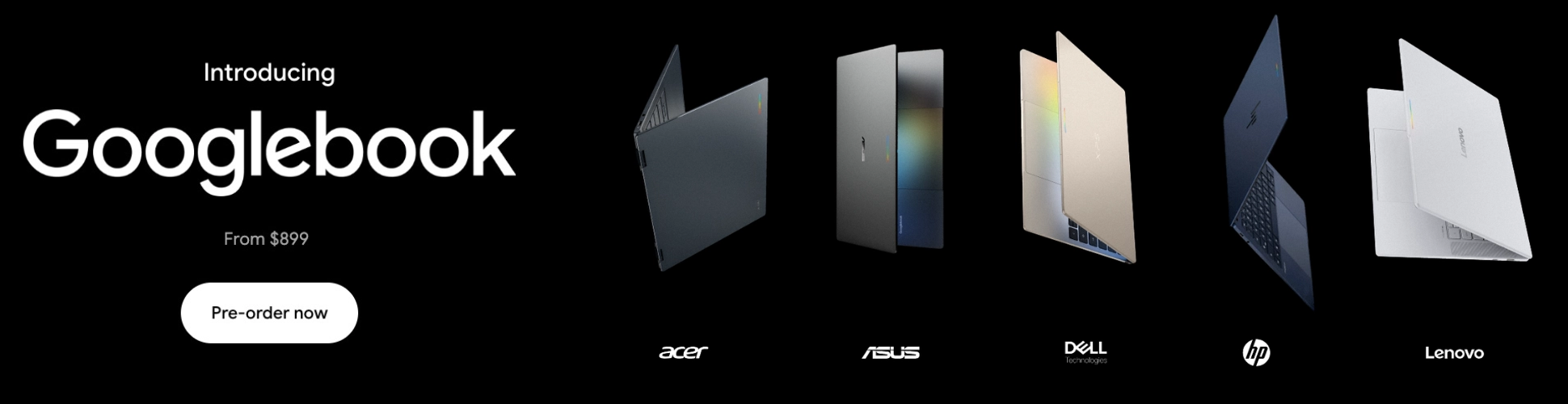
With Googlebook, Google is executing the exact opposite playbook. Every leak ahead of this fall’s launch, from the sub-1kg ASUS CX9406 with up to 64GB of RAM to the Snapdragon X Elite Dell XPS 13 all sit firmly in premium territory.
While those higher-end flagship devices grab the early headlines, a new computing platform cannot survive on one portion of the market alone. Looking across Google’s official roadmap documentation, recent regulatory filings, and our the most recent discovery of Snapdragon X Plus ‘Annite’ and ‘Pic’ boards, a clear three-tier hardware strategy is officially coming into focus.
The three hardware tiers defined by Google
The three-tier framework isn’t industry speculation; it comes directly from Google’s internal product management hiring documents for the Aluminium OS platform early on in the formation of Googlebook. Google officially defined its target device portfolio across three distinct market segments in the job listing:
Define the portfolio strategy for consumer and enterprise Android PC hardware, curating a portfolio of devices across various tiers (Chromebook, Chromebook Plus, AL Entry, AL Mass Premium, and AL Premium) that meets the needs of users and the business.
– Google job listing for Senior Product Manager, Android, Laptop and Tablets
We recently saw this naming convention surface in the real world when an upcoming HP Googlebook 14c (TPN-H111, codenamed ‘Quartz’) appeared in the Bluetooth SIG certification database registered officially as the “HP 14 inch Aluminium Premium Book.” Here is how those three tiers break down across the ecosystem from what we can tell thus far:
- AL Premium: The halo launch tier arrives this fall and features high-end materials, OLED panels, top-tier silicon (Intel Panther Lake Core Ultra 7, Qualcomm Snapdragon X Elite / Snapdragon X2, MediaTek Dimensity CX), and strict hardware requirements across the board.
- AL Mass Premium: The high-volume consumer and business sweet spot that should balance 8-core silicon (like Qualcomm’s Snapdragon X Plus and Intel Core Ultra 5), full 45 TOPS NPU execution, all-day battery efficiency, and a more mid-range pricing structure.
- AL Entry: The eventual mainstream and education tier with cost-optimized silicon designed to bring native Android desktop apps and core Gemini capabilities to affordable laptops over time.
Why Google is starting at the top
According to what VP John Maletis shared during our exclusive interview with him, launching top-down with the AL Premium tier is a deliberate, necessary move. To convince developers to build responsive, keyboard-and-mouse-optimized desktop interfaces for heavy apps like Adobe Premiere Pro and Canva, Google had to prove that Googlebook is a legitimate workstation platform capable of competing with Apple’s M-series MacBooks and Windows Copilot+ PCs.
By packing first-wave machines with 32GB to 64GB of RAM, high-resolution OLED displays, and dedicated AI coprocessors, Google establishes high expectations for performance and hardware quality on day one.
‘Annite’ and ‘Pic’ prove the AL Mass Premium tier is already underway
While the fall launch spotlight will belong to flagship models, the AL Mass Premium tier is where Googlebook will capture even more of the mainstream market share.
Our recent look at the Snapdragon X Plus ‘Annite’ and ‘Pic’ development boards in the Chromium Gerrit is our first concrete proof of this middle tier in action. Because Qualcomm kept the exact same 45 TOPS Hexagon NPU inside the 8-core Snapdragon X Plus as its 12-core Elite sibling, buyers in the midrange bracket will get the exact same instant local AI responsiveness – including screen reasoning, Magic Pointer cursor context, and background task automation – without paying the higher, flagship prices
What the AL Entry tier means for the future of Chromebooks
The presence of an AL Entry tier in Google’s planning documents answers the biggest question looming over the hardware landscape: what happens to affordable Chromebooks for consumers and education?
While traditional ChromeOS will continue to anchor budget classrooms and entry-level computing for the immediate future, the AL Entry tier confirms that Google envisions a future where Aluminium OS eventually scales across the entire pricing spectrum. Getting to the point where we have enough internal hardware to run the Googlebook OS properly will likely take a bit of time, but the plans are in place already to move in that direction.
A mature platform rollout from day one
Watching Google structure Googlebook into high-end, mid-range and affordable tiers demonstrates how much the company has learned from the past decade of laptop hardware. Rather than scrambling to add premium features to a budget operating system, Google is building a flagship-first ecosystem with a clear, calculated roadmap for mainstream affordability. And I have a sneaking suspicion it is going to work.
SUBSCRIBE TO UPSTREAM
Get Chrome Unboxed delivered straight to your inbox
Upstream is our flagship, curated newsletter with the top stories, most click-worthy deals, giveaways, and trending articles from Chrome Unboxed sent directly to your inbox a few times a week. Join 31,000+ subscribers.

