

Support our independent tech coverage. Chrome Unboxed is written by real people, for real people—not search algorithms. Join Chrome Unboxed Plus for just $2 a month to get an ad-free experience, access to our private Discord, and more. Learn more about membership here.
START FREE TRIAL (MONTHLY)START FREE TRIAL (ANNUAL)
For years, the narrative surrounding Google’s laptops has been firmly rooted in the budget-heavy language. When most people hear the word Chromebook, their minds immediately drift to affordable, rugged plastic devices built for school classrooms or lightweight web browsing on a budget. Google and its hardware partners have certainly made plenty of excellent attempts to break into the premium tier over the years, but changing a long-standing consumer perception is a massive uphill battle.
As Google prepares to transition into the Googlebook era, they aren’t trying to gently nudge the category upstream. They are completely upending the existing model.
During our recent virtual sit-down interview with Google VP John Maletis, he confirmed a major piece of the structural strategy behind the upcoming launch. When the first wave of Googlebooks lands on store shelves this fall, the platform is launching exclusively as a high-end, premium hardware category.
A hardware baseline with a very high bar
When you look back at the history of ChromeOS, one of its greatest strengths was its open flexibility. The operating system was so lightweight that it could run on practically any low-end processor with minimal memory. While that was great for accessibility, it also meant that a lot of consumers had their first ecosystem experience on sluggish, underpowered hardware.
With the Googlebook category, Google is taking a much more active, disciplined approach to quality control right out of the gate.
“If we’re going to put the Google brand on a product like Googlebook, we need to make sure that it’s got a really high bar of quality and polish against it,” Maletis told us during the interview. “We are starting premium with these devices. I’ve seen the designs; our OEM partners have stepped up enormously. These are beautiful devices, incredible hardware. They’re premium.”
To guarantee this level of performance, Google is setting strict, non-negotiable baseline hardware specifications that manufacturers must meet to earn the Googlebook badge. This includes stringent mandates covering everything from top-tier processor architectures (like Intel Panther Lake, Snapdragon X Plus, and MediaTek’s flagship silicon) to minimum memory, storage speeds, and even specific keyboard and trackpad layouts.
Letting hardware partners shine
While Google is enforcing tight rules to prevent software fragmentation and ensure a unified consumer experience, they are also striking a careful balance to let their hardware partners innovate. In the past, computer manufacturers sometimes felt restricted by how much they could customize the look and feel of a Google-backed device.
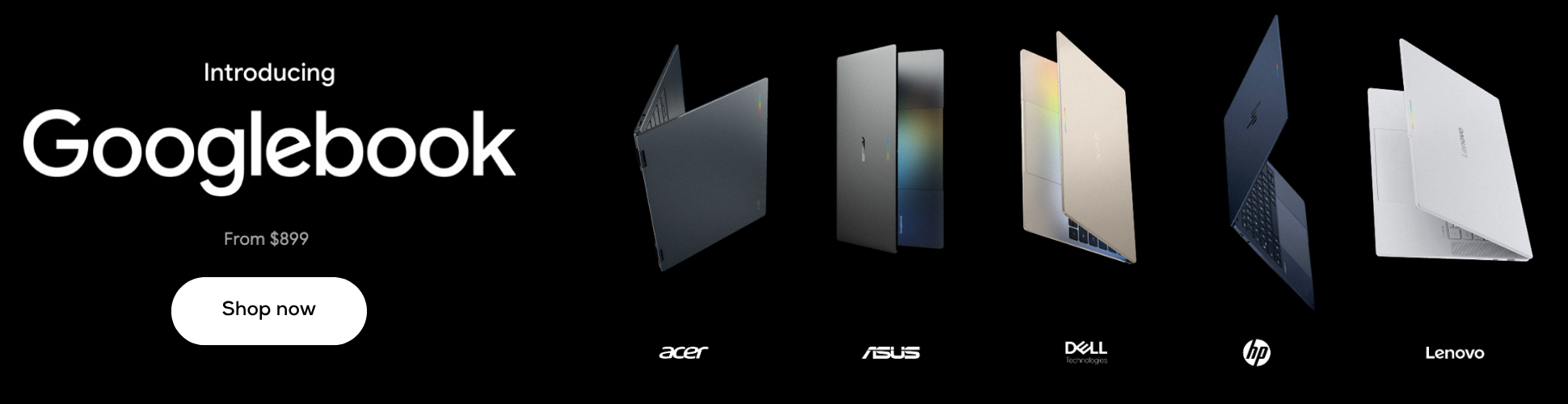
For the Googlebook launch, major partners like Dell, HP, ASUS, Acer, and Lenovo are being given the green light to inject their own flagship design language into the machines.
“We want that consistent look and feel, but we also want our partners to be able to shine as well,” Maletis explained. “You’ll see examples of that both on the hardware and on the software.”
This means when you walk into a retail store later this year, you won’t just see generic, carbon-copy laptops. You will see Dell bringing its premium commercial and consumer craftsmanship back into the ecosystem in a major way, sitting right alongside flagship designs from the rest of the cohort. Every single one of them will look and feel like a true luxury item capable of standing toe-to-toe with a premium Windows laptop or a MacBook Pro.
Scaling down over time
While tech enthusiasts are understandably thrilled about a fleet of beautifully crafted, compromise-free laptops, a strictly premium launch strategy might cause a little bit of anxiety for users who love the ecosystem for its traditional affordability.
Fortunately, Google isn’t abandoning the broader market. Maletis clarified that launching at the top is a strategic choice to firmly establish the identity and capabilities of the platform before expanding down the price ladder.
“We’ve always been about enabling technology and the ability to be productive and access information regardless of your price point,” Maletis reassured us. “And so over time we will come down, but these first devices are super premium.”
By starting at the tip-top of the mountain, Google is ensuring that the initial public perception of a Googlebook is tied directly to elite performance, beautiful aesthetics, and advanced local AI functionality. It’s a bold, confident statement that signals exactly how serious Google is about conquering the high-end computing space.
SUBSCRIBE TO UPSTREAM
Get Chrome Unboxed delivered straight to your inbox
Upstream is our flagship, curated newsletter with the top stories, most click-worthy deals, giveaways, and trending articles from Chrome Unboxed sent directly to your inbox a few times a week. Join 31,000+ subscribers.

