
Support our independent tech coverage. Chrome Unboxed is written by real people, for real people—not search algorithms. Join Chrome Unboxed Plus for just $2 a month to get an ad-free experience, access to our private Discord, and more. Learn more about membership here.
START FREE TRIAL (MONTHLY)START FREE TRIAL (ANNUAL)
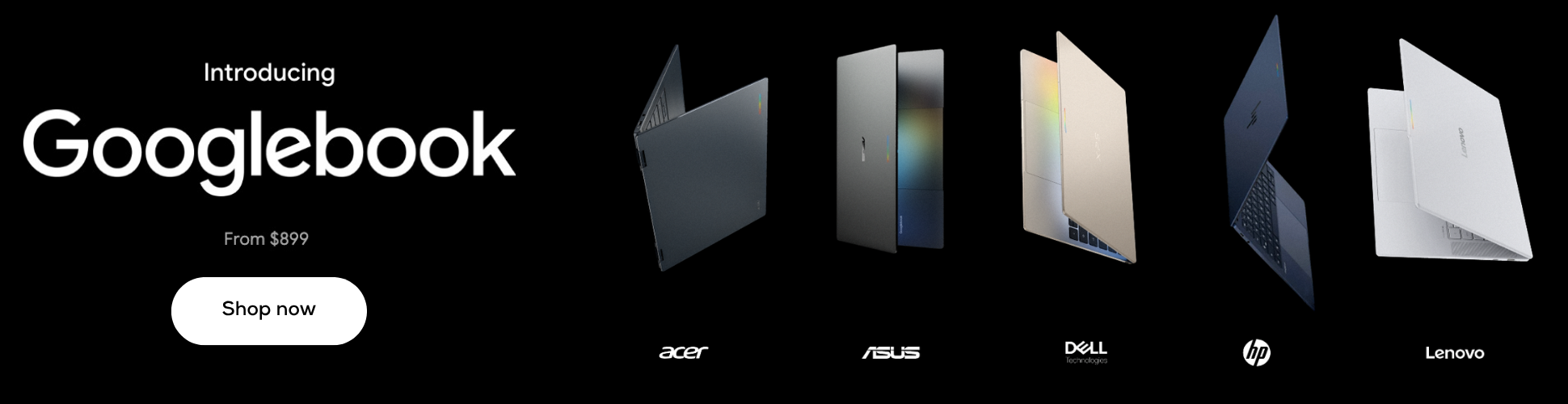
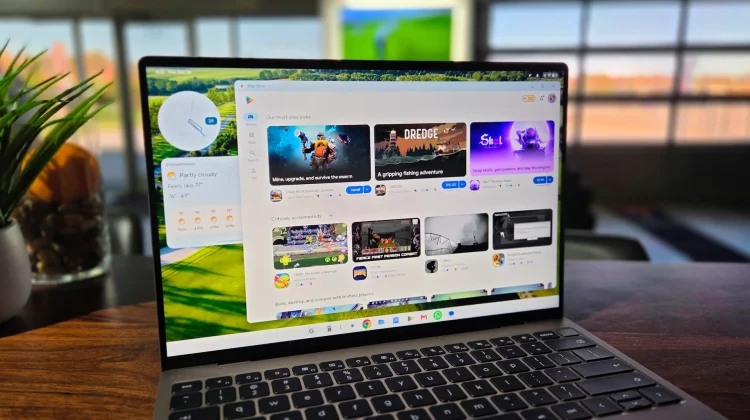
With Googlebook now out in the wild, joining alongside Android foldables and tablets, we have more large-screen Android devices in people’s hands than ever before. Yet, the problem of mobile apps on large screens is still a very real, very frustrating issue to contend with.
Opening an Android app only to see a tiny vertical phone layout, stretched tablet buttons with zero hover effects, or broken window resizing ruins the experience of utilizing a larger screen. It’s not a new issue by any stretch of the imagination, but with more large screen device out there now, it’s an issue that really needs to be addressed.
Now, Google is finally stepping in with some serious incentive – and repercussions. As reported by Android Authority from the ongoing Android Dev Summit in Mountain View, Google officially announced that the Google Play Store will begin evaluating app quality on foldables and large screens starting next year, actively rewarding well-adapted applications with boosted search rankings and prominent store placement.
Why asking nicely never worked for large-screen Android apps
For nearly a decade, Google has published helpful design guidelines, held developer workshops, and pleaded with software makers to optimize their interfaces for tablets and foldables. While major productivity tools and streaming platforms eventually built responsive layouts, thousands of popular apps simply ignored the advice because traditional smartphones accounted for 95% of their daily active users.
Without a direct financial incentive to care, developers have left compact mobile layouts alone to scale awkwardly across larger screens. That hands-off approach has been frustrating for tablet and Chromebook users for years, and now with Googlebooks bringing Android 17 directly onto 14-inch and 15-inch clamshells, unoptimized phone apps are something Google clearly wants to see corrected.
By moving beyond passive design suggestions and tying large-screen responsiveness directly to Play Store discovery algorithms, Google is changing the equation. If an app maker wants their product featured on the homepage or ranked at the top of search results on foldables, tablets, and Googlebooks, building a responsive layout is no longer optional.
Smarter developer tools to help apps scale without rewriting code
To make sure developers actually comply rather than abandoning large screens entirely, Google is pairing its store ranking incentives with a suite of automated development tools built into Jetpack Compose. Instead of forcing teams to build and maintain separate desktop codebases from scratch, new AI-assisted adaptive skills handle the heavy lifting:
- Automated desktop controls: Audits existing mobile interfaces to automatically inject essential laptop controls, including mouse hover states, custom pointer cursors, control tooltips, and physical keyboard shortcuts.
- Dedicated tabletop layouts: Detects partial hinge angles on foldables like the Galaxy Z Fold 8, automatically splitting camera viewfinders and media playback controls into ergonomic split-pane views.
- Responsive layout foundations: Integrates updated Navigation 3 v1.2 libraries and upcoming Compose 1.13 components to deliver stable Grid and Flexbox scaling that dynamically reflows text and image assets as desktop windows are resized.
A massive win for the future of Google’s desktop ecosystem
Seeing Google take a proactive stance on app quality is one of the most encouraging platform signals we have seen since Googlebooks were introduced. As I noted when asking for a little patience with early Googlebook software quirks, Google has built phenomenal physical hardware, but getting third-party developers to embrace multi-window desktop computing was always going to require strong platform leadership.
By giving well-optimized apps prominent placement in the Play Store, Google is creating an environment where developers actively compete to deliver desktop-class experiences. We are continuing to put all the current Googlebooks through heavy daily testing, and as Google rolls out its specific Play Store quality criteria later this year, we will see which of our favorite Android apps make the leap to real big-screen maturity first.
SUBSCRIBE TO UPSTREAM
Get Chrome Unboxed delivered straight to your inbox
Upstream is our flagship, curated newsletter with the top stories, most click-worthy deals, giveaways, and trending articles from Chrome Unboxed sent directly to your inbox a few times a week. Join 31,000+ subscribers.

