
Support our independent tech coverage. Chrome Unboxed is written by real people, for real people—not search algorithms. Join Chrome Unboxed Plus for just $2 a month to get an ad-free experience, access to our private Discord, and more. Learn more about membership here.
START FREE TRIAL (MONTHLY)START FREE TRIAL (ANNUAL)
Let me first address the elephant in the room: AI fatigue is very real. I get it, and even though I’m finding more and more use for Gemini each day, the constant stuffing of AI terminology in the current tech sphere is getting tired.
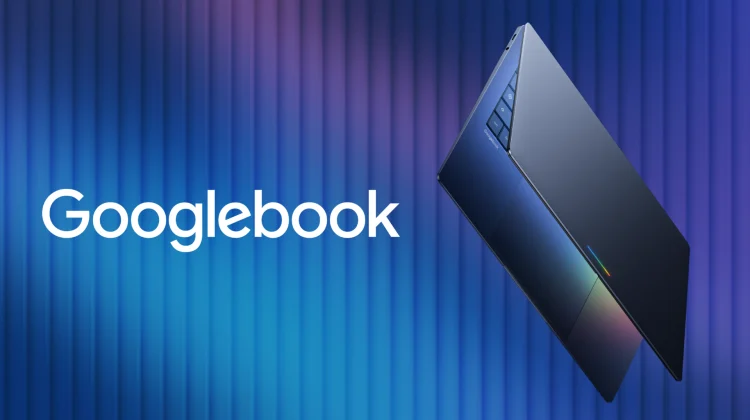
Over the past two years, practically every product announcement, operating system update, and hardware refresh has been smothered in AI buzzwords. Google is certainly no exception. If you visit Google’s landing page for Googlebook, the very first headline greeting you is “A new kind of laptop designed for Gemini Intelligence.”
From dedicated keyboard Gemini keys to proactive agents like Magic Pointer and the newly surfaced Look up contextual tool, Google’s marketing machine is making sure the world knows AI sits at the very heart of this new platform. And I genuinely hope those AI-assisted tools prove helpful in daily workflows and aren’t just parlor tricks.
But if I’m being completely candid, I am not really excited about Googlebook because of AI. Even if you stripped out every single AI feature, autonomous agent, and Gemini integration on Day One, in my mind, Googlebook would still represent the single most thrilling leap forward in Google-powered laptops/tablets since the launch of ChromeOS fifteen years ago.
The true evolution of the Chromebook
To understand why Googlebook has me so pumped, you have to look past the buzzwords and look at the fundamental computing experience. What we are witnessing isn’t just a new AI sandbox for Google to play in; it is the natural, necessary evolution of the Chromebook.
Chromebooks are awesome. The open web is awesome. As I wrote recently about why I can still love Chromebooks and be thrilled for Googlebook, the speed, simplicity, rock-solid security, and instant-on nature of ChromeOS made it my primary desktop computing environment for over a decade.
However, anyone who has lived in this ecosystem knows where the ceiling is. For years, we’ve dealt with hit-or-miss Android app virtualization (ARCVM), a lack of most creative app suites, and a perpetual shortage of premium, flagship hardware. When a great flagship finally did arrive, it usually stood alone for at least a year without meaningful competition. Think Pixelbook, HP Dragonfly Pro, etc.
But Googlebook destroys those ceilings in one swift motion.
Flagship hardware everywhere you look
For the first time in Google’s consumer laptop history, we aren’t waiting around hoping an OEM decides to build a proper premium laptop.
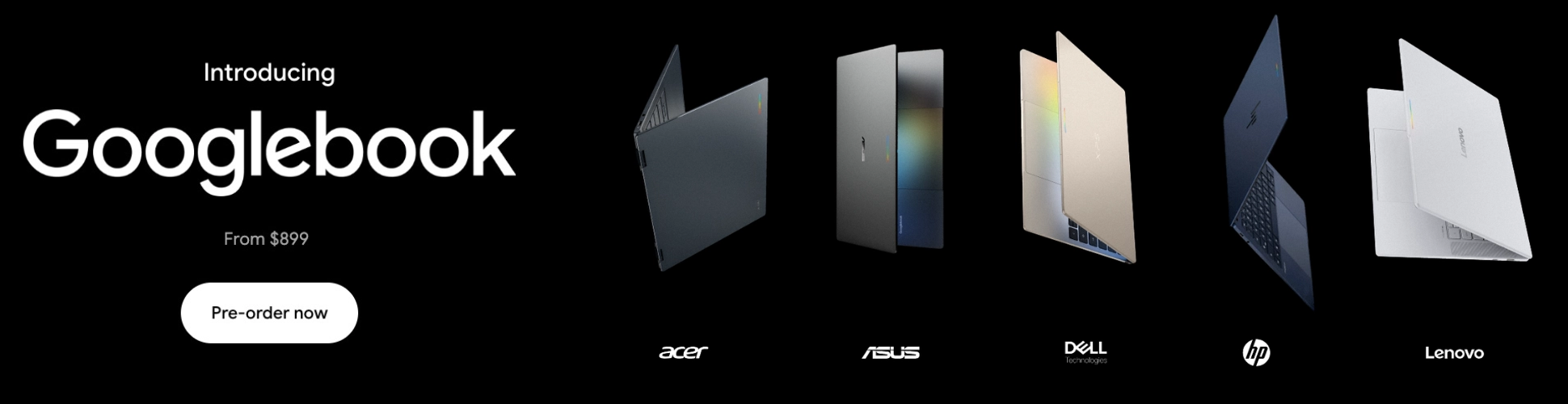
As we discussed when looking at why Googlebook’s day-one lineup is unlike anything in laptop history, Google and its partners are showing up to the starting line with up to eight distinct flagship devices.
We are getting high-end, premium machines from Lenovo, HP, Dell, Acer, and Asus with high-end silicon across the board (Qualcomm Snapdragon X chips, flagship MediaTek processors, and Intel Panther Lake silicon) paired with generous 16GB RAM (or higher) baselines, fast SSDs, high-refresh 120Hz OLED panels, haptic trackpads, and stunning aluminum builds.
Whether it’s a sleek clamshell like Acer’s newly teased Googlebook or an uncompromised detachable tablet like the Lenovo Googlebook Duet m, we finally have an ecosystem where high-end hardware is the standard, not a yearly anomaly.
Native Android paired with an uncompromed desktop web browser
Hardware is only half the victory. The software underneath is what truly stands to transform daily use. Instead of running ChromeOS and trying to bolt on Android apps through a virtual container, Googlebook is built from the ground up on a desktop-class Android foundation that runs a full-fat, desktop Chrome browser right on top.
That architectural balance is the dream setup. You get to keep the identical, uncompromising desktop Chrome browser you rely on every day, complete with full extension support, heavy multi-tab performance, and rapid bi-weekly updates. At the same time, Android apps run natively on bare metal with zero translation lag, unlocking true full-resolution offline downloads for streaming services like Netflix, Disney+, and YouTube alongside high-performance mobile and desktop gaming.
Even better, Googlebook won’t have to wait months for containerized patches anymore. It inherits platform upgrades, security patches, and seamless cross-device continuity like Continue On phone handoff in lockstep with the broader Android world. Perhaps most exciting of all, this native execution finally opens the door for pro-grade desktop creative suites, including the highly anticipated arrival of Adobe Premiere.
You don’t need AI to see the massive upside
If Gemini Intelligence makes drafting an email faster or sorting through flight data simpler, that’s icing on the cake. If Look up or Magic Pointer become quick-hit staples of your daily workflow, that’s an incredible addition.
But the real story here is much bigger than a handful of cool AI additions: we are getting a stable, ridiculously fast operating environment powered by top-tier silicon, wrapped in gorgeous hardware, and backed by the world’s most capable desktop browser alongside the world’s largest mobile app ecosystem.
That is why I’m counting down the days until we walk into Google’s media preview in New York on September 15. The AI marketing hype will continue to be pushed first, but the underlying computing evolution from Google is what will keep these laptops on desks for years to come in my opinion.
SUBSCRIBE TO UPSTREAM
Get Chrome Unboxed delivered straight to your inbox
Upstream is our flagship, curated newsletter with the top stories, most click-worthy deals, giveaways, and trending articles from Chrome Unboxed sent directly to your inbox a few times a week. Join 31,000+ subscribers.

