
Support our independent tech coverage. Chrome Unboxed is written by real people, for real people—not search algorithms. Join Chrome Unboxed Plus for just $2 a month to get an ad-free experience, access to our private Discord, and more. Learn more about membership here.
START FREE TRIAL (MONTHLY)START FREE TRIAL (ANNUAL)
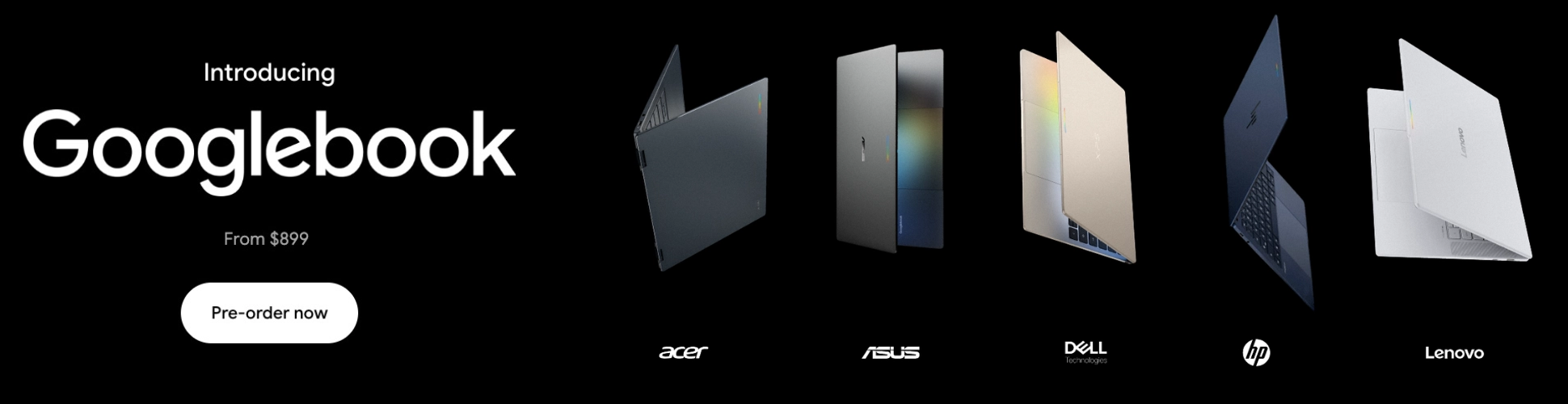
Yesterday was a massive milestone for Google’s desktop computing efforts. Between our breakdown of the brand-new Googlebook OS and hands-on time with launch hardware from Acer, ASUS, Dell, HP, and Lenovo, Google made an undeniable statement about the future of its desktop platform.
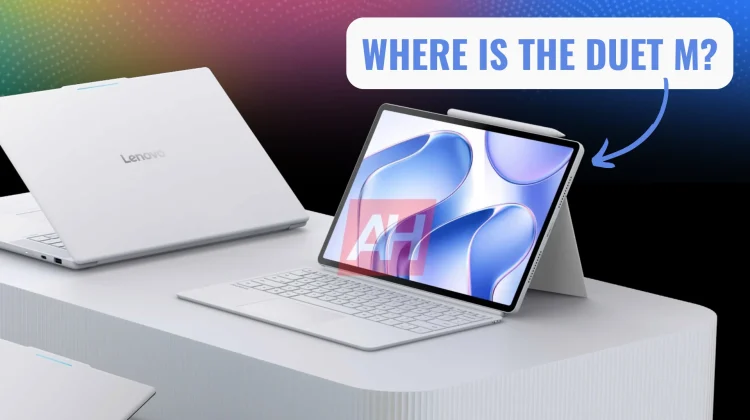
Yet across the website, our YouTube comments, and the Chrome Unboxed Plus Discord, one question keeps bubbling to the top: where on earth was the Lenovo Googlebook Duet m?
For months, the Duet m has been one of the most anticipated, heavily discussed devices expected for this launch. Detachable tablets have long been a beloved staple of the ChromeOS landscape under Lenovo’s Duet branding, and the thought of running an OS with native Android app performance on a modern tablet had people like me eagerly counting down the days until we saw the Duet m in the flesh.
Instead, the launch showcase came and went without a peep about Lenovo’s new tablet. Even more perplexing, MediaTek was completely absent from the event as well, leaving the floor entirely to Intel and Qualcomm. So, what happened?
The Dimensity CX connection is already here
MediaTek did not stay quiet yesterday. Right alongside Google’s morning announcements, MediaTek lifted the embargo on its flagship Dimensity CX C10 Max.
If you look closely at the architectural spec sheet of that 3nm chip, you might feel like you’ve seen it before; and you’d be correct in that assumption because the Dimensity CX C10 Max is fundamentally built on the exact same core silicon blueprint as the Kompanio Ultra powering the Lenovo Chromebook Plus 14:
- The same “All Big Core” CPU topology (1x Cortex-X925, 3x Cortex-X4, and 4x Cortex-A720)
- The identical Arm Immortalis-G925 MC11 GPU
- The identical MediaTek NPU 890 pushing up to 55 TOPS of local AI inferencing
- The same 12MB of L3 and 10MB of system-level cache
The primary technical differences on paper are a modest bump in memory bandwidth support (scaling up to LPDDR5X at 9600 MT/s) and branding under MediaTek’s new “Dimensity Compute Experiences” banner.
This isn’t theoretical silicon years away from production. We already know how well this architecture performs in everyday fanless operation, how cool it runs, and how well it handles intensive workloads without thermal throttling. The silicon was ready to roll; so why did Lenovo and Google choose to leave the Duet m on the sidelines for the big reveal? I have a few thoughts, even if none of them are fully satisfying.
Firmware is locked, regulatory hurdles cleared
Beyond the silicon being ready, the device itself has passed most of the regulatory hurdles we track when watching upcoming hardware cross the finish line.
First, the Lenovo Googlebook Duet m (listed under model number Duet 13M9611) cleared Bluetooth SIG certification weeks ago, confirming its official retail branding alongside Bluetooth 5.4 support. Its primary companion accessory—the wirelessly charging “Lenovo Pen Pro for Googlebook”—also passed through the FCC and Bluetooth SIG, complete with documentation showing how it docks magnetically to the back of the chassis. Certifications like these represent the final public steps before retail rollout; hardware simply isn’t pushed through these agencies unless commercial release is imminent.
Second, and perhaps most telling for those of us tracking development in the repositories, the “Sapphire” baseboard reached firmware lock months ago – all the way back in April.
When a board reaches this milestone in the Chromium Gerrit, active low-level hardware development and baseboard bring-up essentially stop. Engineers are no longer rewriting power states, altering display timings, or much else as the hardware blueprint is finalized and frozen for production images.
In short: there are no missing certifications holding this tablet back, and on both the hardware and regulatory fronts, the Duet m is sitting on the launchpad, completely prepped for release.
One device per OEM to keep the narrative focused
So what, then, could be holding this incredibly anticipated device back? The most pragmatic, grounded explanation might actually be what Google told us directly in New York City.
During the media briefings, Google noted that several OEM partners were eager to launch with multiple models right out of the gate. However, Google actively encouraged each partner to focus on a single, premier hero device for the global unveiling.
For Lenovo, that hero device was the Lenovo Googlebook 15 – a 15.3-inch 120Hz OLED laptop built from magnesium alloy and carbon fiber that delivers an expansive desktop multitasking canvas at an unbelievable 2.84 pounds.
If Lenovo had also put the Duet m on the table, it would have split their own marketing push in half. More importantly, dropping an ultra-sleek, premium OLED detachable tablet into that room would have instantly shifted the entire narrative of the day.
Instead of tech media focusing on how Googlebook redefines the modern clamshell laptop to rival MacBooks, the immediate knee-jerk headline everywhere would have been something along the lines of “Google’s iPad Pro killer has arrived.” That comparison brings an entirely different set of expectations, accessory debates, and software scrutiny that Google may simply not have wanted competing with the core OS narrative on day one.
Tablet mode may need a bit more polishing
There is also the software reality of Googlebook OS to consider. While the new OS is built directly on a full Android stack, turning a desktop windowing environment into a flawless, seamless detachable slate requires meticulous interface transitions.
Going from a physical keyboard and trackpad to a handheld touch canvas with dynamic gestures, digital styluses, and instant orientation shifts introduces edge cases that clamshells don’t have to worry about. We know the hardware itself has cleared regulatory hurdles, but Google and Lenovo may simply be holding back to give the detachable experience to a bit more polish before putting it into consumer hands.
Alternatively, Google and MediaTek may have mutually agreed to give the Duet m its own dedicated spotlight. Following yesterday’s launch, Google SVP Rick Osterloh specifically highlighted the launch of Googlebook and explicitly noted that MediaTek hardware is on the immediate horizon.

Furthermore, MediaTek explicitly confirmed to us that the Dimensity CX C10 Max is slated to debut in an upcoming Lenovo Googlebook product. That much is very clear; and given that the Duet m is the only known MediaTek Googlebook waiting in the wings, that breadcrumb trail leads to only one place.
Regardless, I still don’t like the decision
While it is undeniably frustrating that the Duet m wasn’t part of yesterday’s unveiling, its absence does not necessarily mean the device is in trouble or abandoned. That’s all I can get my head around at the moment.
MediaTek has the silicon ready, the brand-new Dimensity CX C10 Max is officially on the board, and both Google and Lenovo have reaffirmed their partnership to bring MediaTek hardware to market.
With the holiday shopping season rapidly approaching, it is virtually impossible to imagine a scenario where Lenovo, Google, and MediaTek leave a fan-favorite form factor sitting on a shelf through Q4. Rest assured: the Duet m is coming, and it looks like it will have the stage all to itself when it arrives. Here’s hoping that timeline is sooner than later.
SUBSCRIBE TO UPSTREAM
Get Chrome Unboxed delivered straight to your inbox
Upstream is our flagship, curated newsletter with the top stories, most click-worthy deals, giveaways, and trending articles from Chrome Unboxed sent directly to your inbox a few times a week. Join 31,000+ subscribers.

