
Support our independent tech coverage. Chrome Unboxed is written by real people, for real people—not search algorithms. Join Chrome Unboxed Plus for just $2 a month to get an ad-free experience, access to our private Discord, and more. Learn more about membership here.
START FREE TRIAL (MONTHLY)START FREE TRIAL (ANNUAL)
As we inch closer to what we expect to be Google’s fall Googlebook showcase, the roster of upcoming devices we expect over the coming months continues to take shape. Until now, the leaks and benchmark discoveries across Intel, Qualcomm, and MediaTek have pointed mostly toward traditional clamshell devices with a single exception: Lenovo’s MediaTek-powered 13-inch detachable tablet, recently revealed by Bluetooth SIG filings as the Googlebook Duet m.
Now, fresh changes in the Chromium Gerrit reveal that MediaTek won’t be alone in the Googlebook tablet space for long. A new board codenamed ‘Meru’ has officially surfaced, and as I’ve looked a bit more closely at the handful of changes to this device in the Chromium Gerrit, the underlying code makes one thing crystal clear: we have our first Qualcomm Snapdragon-powered detachable Googlebook tablet on the way.
Connecting the dots on ‘Meru’ as a detachable tablet
So far, there are some pretty clear code changes that make me confident that ‘Meru’ will be a tablet. First off, we have the removal of the built-in keyboard. That’s a pretty obvious sign.
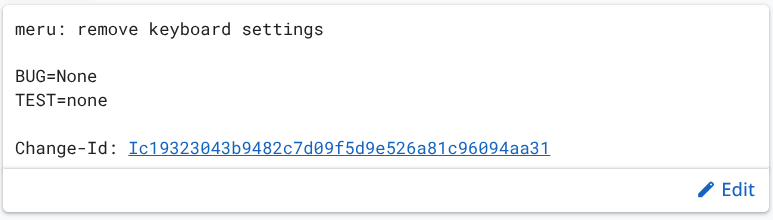
In this commit, developers stripped out the internal keyboard matrix files (keyboard.dtsi). Clamshell laptops always retain this layout; tablets drop it because there is no permanently attached physical keyboard.
Next up is a commit that explicitly describes adding the ability for ‘Meru’ to detect a base keyboard. Again, these are pretty clear signs.
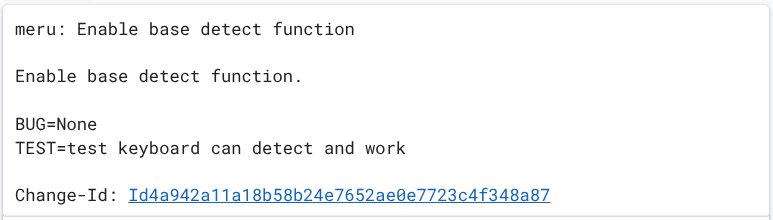
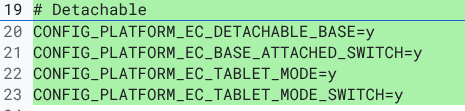
In this commit, you can see code being added specifically to listen for pogo-pin dock connections so the system knows when an external keyboard base is snapped on or off. Digging a bit deeper in the files attached to this commit, we see the following:
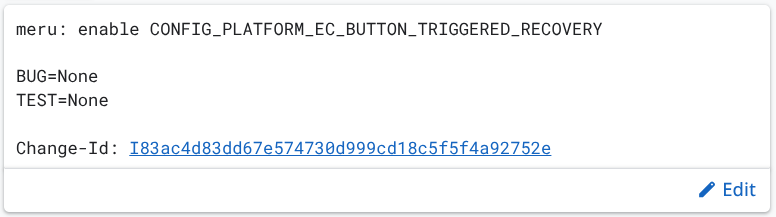
If that’s not enough, we also have volume buttons and button-triggered recovery. Standard Google laptops (like Chromebooks) trigger OS recovery using the Esc+Refresh+Power keyboard combo. Because a tablet doesn’t have a fixed keyboard, ‘Meru’ implements physical side volume rocker buttons and hardware button combinations for boot recovery.
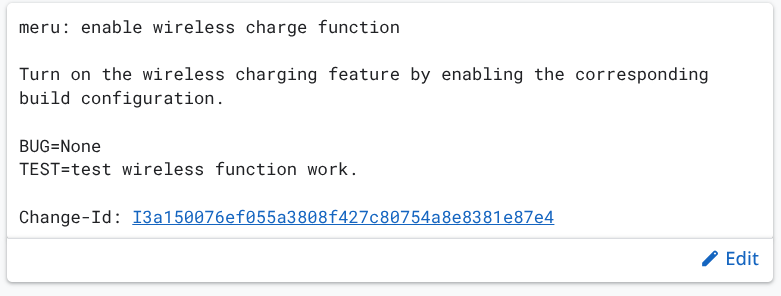
And finally, the commit that turned my head in the first place has to do with magnetic wireless stylus charging. In the code change, we can see the introduction of pen control drivers (pen_control.c), indicating that ‘Meru’ supports an active stylus that charges wirelessly when snapped magnetically to the chassis.
While this technically could still work with a convertible device, the rest of the commits paint a very clear picture of what is going on with ‘Meru’ right now. We’re clearly looking at a device that is quite similar to the upcoming Lenovo Googlebook Duet m, and that makes the fact that ‘Meru’ also looks likely to be built by Lenovo makes things a little confusing.
While I suppose they could launch a Duet S or X (for Snapdragon X), it does seem to be a strange play. There’s no doubt that ‘Meru’ – for the time being, at least – certainly looks to be made by Lenovo. But there are very few code changes in the Chromium Gerrit for this device at the moment, so that could 100% change.
And there’s plenty of time for more details to arise. Because ‘Meru’ has only recently started development in the Gerrit, it likely won’t hit shelves during the first wave of Fall launch devices. Instead, I’d wager this device won’t be seen until months down the road. In that span of time, we’ll find plenty more about this new, Snapdragon X-powered tablet, so stay tuned to Chrome Unboxed as the mystery around ‘Meru’ continues to unfold.
SUBSCRIBE TO UPSTREAM
Get Chrome Unboxed delivered straight to your inbox
Upstream is our flagship, curated newsletter with the top stories, most click-worthy deals, giveaways, and trending articles from Chrome Unboxed sent directly to your inbox a few times a week. Join 31,000+ subscribers.

