
Support our independent tech coverage. Chrome Unboxed is written by real people, for real people—not search algorithms. Join Chrome Unboxed Plus for just $2 a month to get an ad-free experience, access to our private Discord, and more. Learn more about membership here.
START FREE TRIAL (MONTHLY)START FREE TRIAL (ANNUAL)
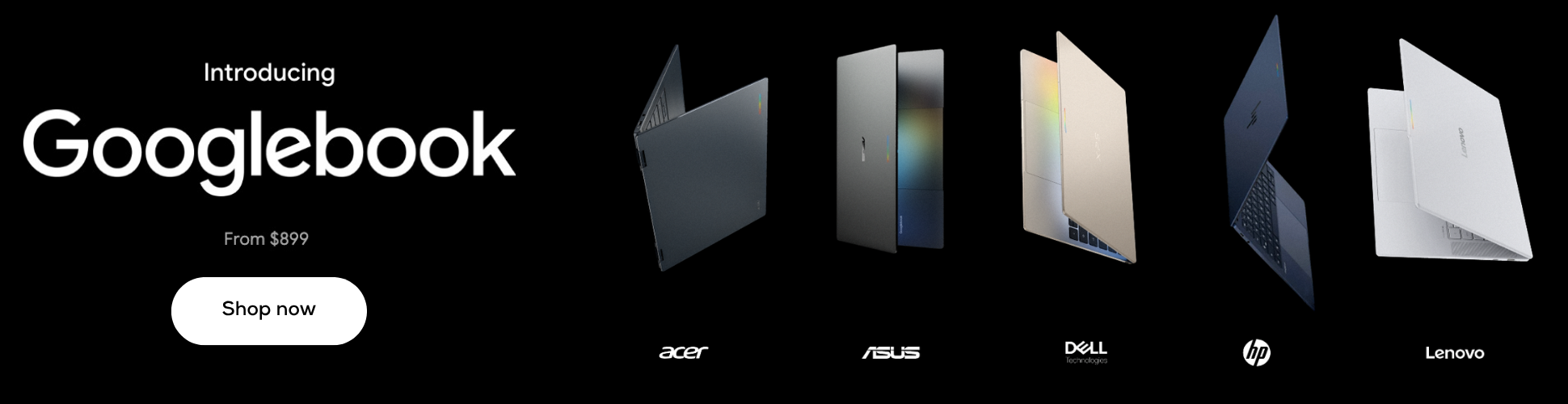
If you’ve spent any time reading our coverage or tracking the rollout of Googlebook OS over the past few months, you know the initial wave of hardware was all about making an undeniable first impression. Between premium flagships like the Dell XPS Googlebook and high-end entries from Acer, ASUS, and Lenovo, Google made sure its new desktop platform arrived looking and feeling like top-tier machinery. But as gorgeous as those laptops are, they also command premium price tags.
That first phase was necessary to prove what Googlebook OS could do on serious silicon, but the real test for long-term adoption is what happens when this platform hits mainstream price brackets. We’ve known for a bit that Intel’s upcoming Core Series 3 chips (code-named Wildcat Lake) are destined to power that exact next chapter.
Now, thanks to some sharp digging by the folks over at GbookHub, we have concrete evidence that Dell is preparing its own entry for this upcoming wave: a new development board codenamed ‘Libra’.
What the code tells us about ‘Libra’
According to the initial public commit on the Chromium Gerrit, Libra is being built on the ‘Ocelot’ reference board. For those who don’t spend their weekends digging through the Chromium Gerrit, ‘Ocelot’ is the parent family Google is using to develop Intel Core Series 3 Googlebooks.
Digging into the configuration files, we can already piece together a solid picture of what this machine will look like in the hand:
- Traditional clamshell form factor: The physical volume rocker usually mapped for tablet mode is explicitly disabled in the code, and lid sensor hooks indicate a standard clamshell rather than a 360-degree 2-in-1.
- Thermal setup: A single cooling fan assembly, which aligns neatly with Wildcat Lake’s efficient, lower-TDP architecture.
- Typing and input: A standard Googlebook keyboard with included backlighting.
- I/O and charging: Two USB-C ports with 65W fast charging support and underlying USB4 capability (though USB4 could easily be tuned or limited by the time production units ship).
- Battery architecture: SMP battery integration utilizing Dell-specific firmware signatures.
That last point, combined with who actually authored the commit, is what really seals the identity here. The developer pushing the code carries an address from Luxshare, a primary contract manufacturing partner for Dell. Even better, that same developer previously worked directly on “Mica” (which became the Dell XPS Googlebook) and “Annite” (an upcoming Snapdragon X Plus device). Pair that with an internal battery string format identical to past Dell builds, and there’s almost zero doubt that Libra is an upcoming Dell Googlebook.
The ‘Ocelot’ family is getting crowded
What excites me most about ‘Libra’ isn’t just that Dell is working on another device; it’s what ‘Libra’ represents in the broader ecosystem. With Libra officially showing up, the Ocelot baseboard family now counts eight distinct variants in active development across virtually every major OEM:
- Libra: Dell (Clamshell)
- Blanc: Lenovo (Clamshell)
- Coolum: HP (Clamshell)
- Ocicat: HP (2-in-1 Convertible)
- Hekla: ASUS
- Matsu: Acer
- Ojal & Kodkod: Unassigned development boards
Seeing Dell, HP, Lenovo, ASUS, and Acer all building out devices on the same mainstream Intel silicon tells us everything we need to know about where Googlebook OS is headed. The platform is getting ready to expand well beyond the $1,000+ early-adopter crowd and settle straight into the sweet-spot laptop tier that most regular consumers, students, and businesses actually buy.
Don’t expect to see Libra on retail shelves by next week, though. Devices at this stage of the process usually require several months of hardware validation and platform tuning, meaning we’re likely looking at an arrival sometime in early 2027. But knowing that Dell already has an affordable clamshell in the pipeline makes the wait for the next generation of Googlebooks a whole lot more interesting.
SUBSCRIBE TO UPSTREAM
Get Chrome Unboxed delivered straight to your inbox
Upstream is our flagship, curated newsletter with the top stories, most click-worthy deals, giveaways, and trending articles from Chrome Unboxed sent directly to your inbox a few times a week. Join 31,000+ subscribers.

