


Support our independent tech coverage. Chrome Unboxed is written by real people, for real people—not search algorithms. Join Chrome Unboxed Plus for just $2 a month to get an ad-free experience, access to our private Discord, and more. Learn more about membership here.
START FREE TRIAL (MONTHLY)START FREE TRIAL (ANNUAL)
If you’ve spent any time following our Googlebook coverage over the last few months, you already know one of the biggest stumbling blocks for this new platform is the price of admission for a set of devices that aren’t as productive as a Googlebook.
Don’t get me wrong: the build quality on these initial machines is genuinely impressive, but starting the lineup at $899 with the Acer Googlebook 14 (and going up to $1299 from there) leaves out the exact mainstream and budget-minded crowd that made Chromebooks a household name in the first place. Until we see sub-$600 hardware hit shelves, Googlebook OS is going to remain under the microscope and miss the wide swath of users buying laptops at a much lower cost on a daily basis.
We already know a wave of 11 more-affordable Intel Wildcat Lake boards is in the works, and now we have fresh evidence that Qualcomm is bringing a budget-friendly entry to the table as well. According to a new breakdown from GbookHub, recent Chromium Gerrit commits connect the dots between a mysterious new Googlebook board called “Bandit,” its underlying series “Dougie,” and Qualcomm’s entry-tier Snapdragon C processor.
Connecting the Chromium Gerrit breadcrumbs
The logic behind this discovery actually comes down to how Googlebook’s bootloader groups Qualcomm silicon together in the source code. A Chromium Gerrit commit review shows that the bootloader shares common power handling across five distinct Qualcomm chip codenames: ‘Hamoa’ (Snapdragon X Elite), ‘Purwa’ (Snapdragon X Plus), ‘Canim’ (currently unknown), ‘Mahua’ (Snapdragon X2), and ‘Kenai’.
For a while now, ‘Kenai’ has been linked to the Snapdragon C – Qualcomm’s entry-level laptop chip announced back in May 2026 for devices starting around $300. Where things get interesting is a newly spotted commit for ‘Kenai’ that adds firmware configuration for the USB-C power delivery controller on a board named ‘Bandit.’
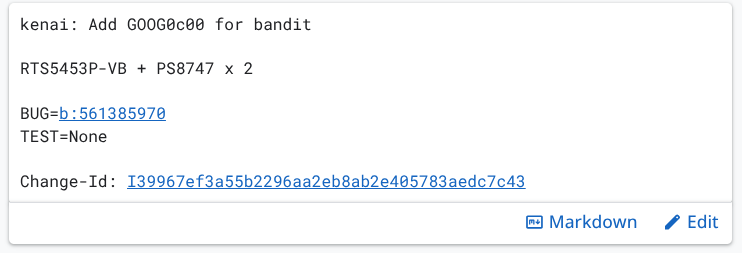
Since we already know Bandit is the first board in the “Dougie” Googlebook series and that Dougie is a Qualcomm chip codename in active development, tying Bandit’s power delivery directly into the ‘Kenai’ codebase strongly suggests that ‘Dougie’ and ‘Kenai’ are linked together at the development level. That puts Snapdragon C squarely at the center of this new device family.
Why Snapdragon C matters for Googlebook OS
Announced earlier this year for budget laptops, Snapdragon C isn’t built to chase benchmark records or handle heavy Windows Copilot+ workloads. Instead, it includes a modest 12 TOPS NPU – just enough to clear Google’s baseline AI hardware requirements for Googlebook OS – while prioritizing battery efficiency and lower manufacturing costs.
Qualcomm claims the Snapdragon C delivers up to 67% faster performance and more than double the power efficiency of Intel’s N250 on battery. If those numbers hold up in real-world use, an entry-level Snapdragon C Googlebook would easily outpace the midrange Chromebooks many of us have been daily driving for years, all while hitting a much friendlier price bracket.
Building out a proper three-tier lineup
Right now, Qualcomm’s presence in the Googlebook space is heavily skewed toward the top end, led by Snapdragon X Elite models from Dell and HP, alongside four Snapdragon X Plus models in the pipeline that should land in that $700 to $1,100 midrange sweet spot.
Adding Snapdragon C via ‘Dougie’ and ‘Bandit (and likely others down the road) would finally give Qualcomm a true three-tier ladder for Googlebook hardware, spanning from flagship X Elite machines down to genuinely affordable devices. Even with Googlebook OS still working through plenty of early desktop growing pains and missing ChromeOS staples, getting capable hardware down into the $300 to $500 range is non-negotiable for long-term adoption.
Of course, early code commits are always subject to change, and we likely won’t see these entry-level Snapdragon C models materialize until at least mid-2027. Still, seeing Google and Qualcomm actively laying the groundwork for affordable ARM-powered Googlebooks is a very welcome sign for where this platform is headed.
SUBSCRIBE TO UPSTREAM
Get Chrome Unboxed delivered straight to your inbox
Upstream is our flagship, curated newsletter with the top stories, most click-worthy deals, giveaways, and trending articles from Chrome Unboxed sent directly to your inbox a few times a week. Join 31,000+ subscribers.

