
Support our independent tech coverage. Chrome Unboxed is written by real people, for real people—not search algorithms. Join Chrome Unboxed Plus for just $2 a month to get an ad-free experience, access to our private Discord, and more. Learn more about membership here.
START FREE TRIAL (MONTHLY)START FREE TRIAL (ANNUAL)
If you have ever tried using a single laptop for both your personal life and your day job, you know a lot about the friction of swapping between those accounts. Juggling personal Gmail, work documents, corporate Slack channels, and school portals on one machine usually devolves into a mess of account collisions, accidental sign-outs, or clunky multi-profile switching.
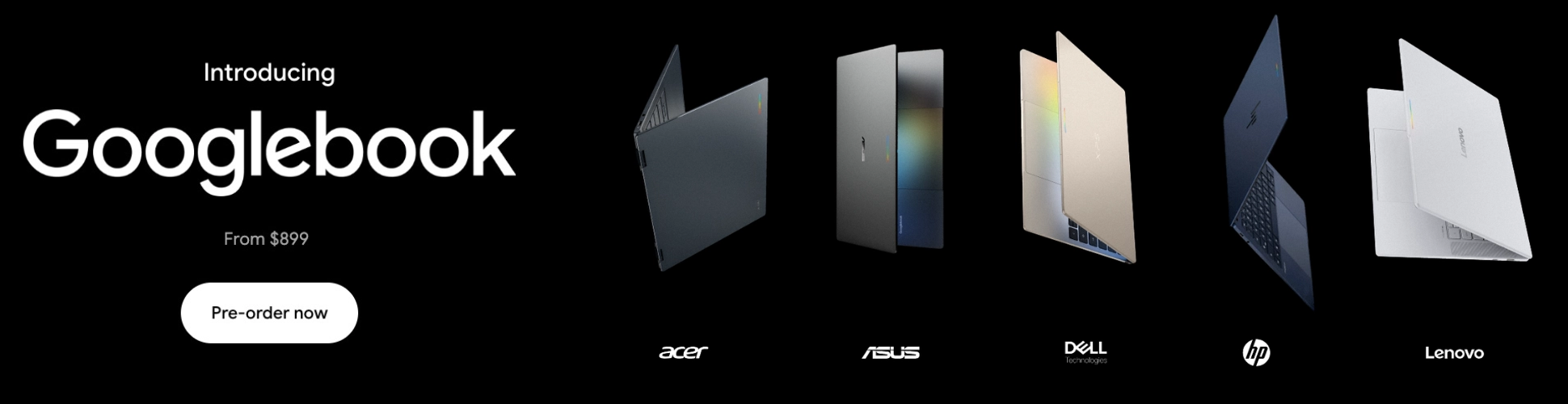
With the arrival of Googlebook OS, Google is finally fixing that dynamic. As detailed in a newly published Googlebook Help Center guide, Google’s new desktop operating system borrows one of Android’s most mature enterprise features: native Work Profiles. For anyone using their new laptop as a daily driver for both personal projects and corporate tasks, it completely changes the daily workflow.
The long-standing headache of multiple Google accounts
On traditional operating systems, handling two separate Google accounts has always felt like a compromise. On Windows and macOS, you typically manage this by creating separate Chrome browser personas, which works well enough until you click a link in an external desktop app and watch it open in the wrong browser profile.
On ChromeOS, the situation was even more divided. While you could technically add a secondary account into your primary session, enterprise security policies would often lock down the entire browser. The cleaner alternative was setting up two entirely distinct user accounts on the lock screen, forcing you to switch back and forth between full operating system profiles. That kept your work and personal lives separated, but it completely isolated your windows and made quick multi-tasking feel like a chore.
How Android work profiles change the game on desktop
Because Googlebook OS is built on modern Android foundations, it bypasses that legacy desktop baggage entirely. Instead of forcing you to log out or juggle separate full-screen sessions, Google uses Android’s containerized Work Profile architecture right on your main desktop.
When you add a work or school account to your personal Googlebook, the operating system creates an isolated, encrypted sandbox alongside your personal space. Work-approved apps appear right on your primary desktop and taskbar, distinguished by a clean little blue briefcase badge on the icon.
You do not need to switch users, swap desktops, or jump between browser instances. Your personal Chrome window sits right next to your work-badged Slack app, corporate Gmail client, or enterprise Docs editor. Everything lives on a single, unified screen, eliminating the constant mental tax of remembering which profile is active.
Keeping IT admins out of your personal business
The biggest benefit of containerization comes down to privacy. In a standard bring-your-own-device (BYOD) setup, employees are often rightfully hesitant to sign into company accounts on personal hardware because mobile device management (MDM) software can demand broad administrative privileges over the machine.
With a Googlebook Work Profile, your employer’s IT policies are confined strictly to the work container:
- Siloed corporate control: IT administrators can remotely wipe work data, enforce VPN policies, or mandate password complexity solely inside the work partition.
- Total personal privacy: Your employer cannot view your personal browsing history, see your personal Google Drive files, access your photos, or inspect personal apps installed on the device.
- Zero data bleeding: Clipboard sharing and file transfers between work and personal containers can be managed according to corporate security rules without compromising your machine’s base storage.
A built-in switch for real work-life balance
Beyond privacy and window management, there is a mental health benefit here that regular laptops have lacked for years: an actual off switch for your job.
Inside the Googlebook quick settings shade, there is a dedicated toggle to pause your work profile. When you finish your workday, you tap that button, and every work-badged application immediately shuts down. Background syncing stops, calendar alerts pause, and corporate emails stop buzzing your desktop.
You get to keep using your laptop for streaming video, personal web browsing, or casual gaming in the evening without a sudden influx of work notifications pulling you back into the office.
While our early hands-on impressions of Googlebook OS pointed out plenty of areas where desktop windowing and features like Virtual Desks still need refinement, the implementation of native work profiles is an undeniable bright spot. It is a prime example of Google taking a proven mobile feature and using it to solve a genuine desktop annoyance.
SUBSCRIBE TO UPSTREAM
Get Chrome Unboxed delivered straight to your inbox
Upstream is our flagship, curated newsletter with the top stories, most click-worthy deals, giveaways, and trending articles from Chrome Unboxed sent directly to your inbox a few times a week. Join 31,000+ subscribers.

