

Support our independent tech coverage. Chrome Unboxed is written by real people, for real people—not search algorithms. Join Chrome Unboxed Plus for just $2 a month to get an ad-free experience, access to our private Discord, and more. Learn more about membership here.
START FREE TRIAL (MONTHLY)START FREE TRIAL (ANNUAL)
With the first retail wave of Googlebook hardware set to land on store shelves in just a matter of days on October 4, you might expect the Chromium development repositories to take a brief breather when it comes to new devices in this category; but that’s definitely not the case at all.
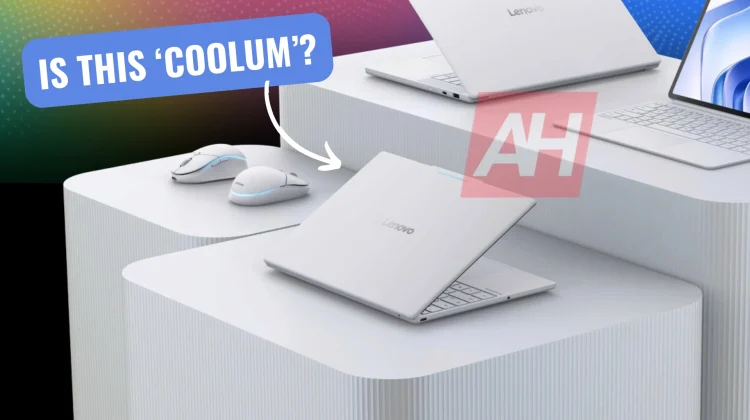
As first spotted by GbookHub, a brand-new development board codenamed ‘Coolum’ has officially emerged in the Chromium Gerrit. And after digging through the initial code commits, baseboard inheritance, and developer assignments, all signs point to a new, more budget-conscious Intel clamshell from Lenovo.
What ‘Coolum’ brings to the table
‘Coolum’ was registered in late September as a derivative model branched directly off ‘Ocelot’ – Google’s reference program for laptops powered by upcoming Intel Core Series 3 (Wildcat Lake) processors.
While the board is still in its infancy, the initial commits already flesh out a clear physical blueprint:
- Touch-Enabled Clamshell: The code reveals direct support for a touchscreen display alongside explicit commits removing tablet mode detection and physical side-mounted volume buttons. That firmly establishes Coolum as a traditional clamshell laptop rather than a 360-degree convertible or detachable slate.
- Everyday I/O & Thermals: The initial commits confirm active fan cooling, a backlit keyboard, support for up to 65W USB-C charging, and dedicated controller configurations driving a combination of both USB-C and legacy USB-A ports.
Why this points directly to Lenovo
Connecting code commits to a specific OEM before hardware certifications pop up requires a deeper look at who is actually writing the code. The engineers actively pushing commits for ‘Coolum’ share a long, distinct commit trail with other known Lenovo hardware and are actively assigned to Lenovo Googlebook projects like the unannounced ‘Sapphire’ (the Duet m) and additionally have extensive commit histories across notable Lenovo Chromebook boards like ‘Pujjocento’ (the Lenovo Chromebook Plus 2-in-1 14) and ‘Ciri’ (the Lenovo Chromebook Duet 11).
Rounding out Lenovo’s Googlebook portfolio
Seeing Lenovo jump into the ‘Ocelot’ family makes total strategic sense when you look at how their launch lineup is currently structured.
During Google’s media showcase in New York City, Lenovo started off with the premium Lenovo Googlebook 15 (codenamed ‘Ruby’), an ultra-thin 15.3-inch OLED flagship powered by high-end Intel Core Ultra Series 3 (Panther Lake) silicon. On the ARM side, Lenovo has the MediaTek-powered Duet m waiting in the wings and additional Snapdragon X projects in the pipeline.
What they are currently missing is a more-grounded, mainstream x86 laptop built for users who don’t need an expansive 15-inch 120Hz OLED canvas or four-figure price tags.
By building a clamshell on Intel Core Series 3 (Wildcat Lake), Lenovo is positioning a device to capture the vital $600–$800 mid-range tier that can deliver solid everyday performance, modern NPU capabilities, and practical port selection in an accessible chassis.
What about ‘Quenbi’?
Many of you may recall that ahead of Google’s NYC event, we posited that the mysterious third laptop in Lenovo’s leaked renders might be ‘Quenbi’ since we knew it was a board that was still in active development and on the same timeline as the rest of the launch hardware. At the time, with limited commits to go on, it was our best guess for that more-compact 14-inch chassis.
However, looking at the technical landscape now, ‘Coolum’ makes significantly more sense. As a direct derivative of the Intel Core Series 3 ‘Ocelot’ reference board, ‘Coolum’ provides the exact hardware foundation Lenovo needs to deliver an affordable, everyday 14-inch laptop. While ‘Quenbi’ remains an intriguing development board in its own right, ‘Coolum’ aligns far more cleanly with the missing piece of Lenovo’s launch puzzle.
Don’t expect it soon
Because ‘Coolum’ is just now spinning up its initial code commits, this isn’t a machine we’ll see hitting Best Buy or the Google Store anytime soon.
With the first wave of flagship Googlebooks launching next week and the Duet m still waiting for its official day in the sun, Wildcat Lake devices like ‘Coolum’ are firmly pointed toward early 2027. We will keep tracking this one and others like ‘Quenbi’ and ‘Aneto’ through the Gerrit as more boards mature more details come to light. Stay tuned!
SUBSCRIBE TO UPSTREAM
Get Chrome Unboxed delivered straight to your inbox
Upstream is our flagship, curated newsletter with the top stories, most click-worthy deals, giveaways, and trending articles from Chrome Unboxed sent directly to your inbox a few times a week. Join 31,000+ subscribers.

