
Support our independent tech coverage. Chrome Unboxed is written by real people, for real people—not search algorithms. Join Chrome Unboxed Plus for just $2 a month to get an ad-free experience, access to our private Discord, and more. Learn more about membership here.
START FREE TRIAL (MONTHLY)START FREE TRIAL (ANNUAL)
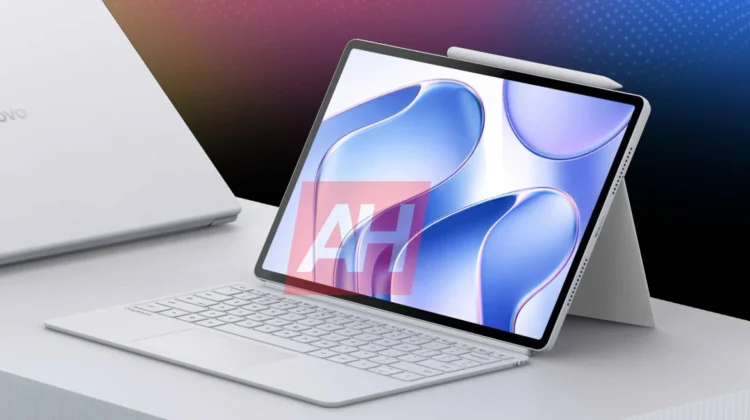
Earlier this week, we discussed the oddity around the Lenovo Googlebook Duet m and MediaTek being absent from Google’s launch event. There were a few reasons that could be behind the odd decision for both MediaTek and Lenovo to make this move; we talked through Google’s guidance for a single device from each OEM to kick-start the Googlebook era and the likely desire to avoid an immediate iPad Pro comparison as possible (albeit non-satisfying) reason that could have kept it away from the event.
In that breakdown, we also entertained the most obvious scenario, too: Could Lenovo and Google have hit an unexpected technical snag that forced them to hit the brakes at the eleventh hour? Given the situation, the fair assumption is that engineers are scrambling behind closed doors to fix a critical bug or firmware problem.
However, looking directly at the development inside the Chromium Gerrit, I think we can officially put that theory to rest. The code commits tell a pretty clear, undeniable story: there is no frantic scramble in the development channels and the Duet m has been finished and waiting for months at this point.
What a troubled launch actually looks like in the Gerrit
The Lenovo Googlebook Duet m has been developed under the board codename ‘Sapphire’. When a hardware manufacturer is battling last-minute instability or driver crashes that threaten a retail launch, the Gerrit lights up like a Christmas tree. You see frantic daily patches, emergency reverts, battery optimization workarounds, and late-stage thermal throttles being tested right up to the wire.
With ‘Sapphire’, the exact opposite has taken place.
The baseboard reached Firmware Lock all the way back in the spring. Firmware Lock is a big development milestone for any device as it marks the point where low-level hardware bring-up is frozen, the BIOS/coreboot environment is finalized, and core silicon behavior is deemed stable.
Over the last several months, commits touching ‘Sapphire’ have slowed to an absolute crawl. The few commits passing through have been mundane maintenance: routine upstream merges, high-level UI flags, and minor config tidy-ups. There are no emergency board-level revisions. From a code and hardware perspective, the engineering heavy lifting was completed long ago.
Certifications and retail branding were finalized weeks ago
If code commits aren’t showing signs of panic, the regulatory trail cements the timeline even further:
- Bluetooth SIG Qualification: The device cleared Bluetooth SIG qualification under model number Duet 13M9611, which explicitly codified its official commercial marketing name as the Lenovo Googlebook Duet m.
- Peripherals Are Cleared: Its bespoke companion accessories – including the magnetic, wirelessly charging Lenovo Pen Pro for Googlebook – have already wound their way through both the FCC and Bluetooth SIG, detailing its dock charging coils and physical placement.
When an OEM locks in retail product names, certifies companion accessories, and leaves its underlying firmware untouched for months, they aren’t working on a prototype or troubleshooting a late-stage hardware defect. They are sitting on a finished consumer product.
A strategic pause, not an engineering crisis
Connecting these new code findings back to our earlier discussion removes the last remaining question mark:
- The silicon is production-ready: As we highlighted with the debut of the Dimensity CX C10 Max, MediaTek’s 3nm, 55 TOPS architecture is ready for deployment.
- The hardware and firmware are frozen: ‘Sapphire’ has been quiet since spring with zero indications of late-stage panic.
- The regulatory pipeline is cleared: The tablet and its stylus are certified and stamped with official retail branding.
We can officially dismiss the idea that the Duet m missed Google’s New York event because something went wrong with the hardware or software. This was an intentional decision that I’m still not sold on. At some point, the Googlebook Duet m will arrive, and I can’t think of any scenario at this point that would make sense for keeping it out of the early launch plans.
Whether Lenovo held back to let the Lenovo Googlebook 15 stand alone as its hero clamshell, or Google and MediaTek wanted to give this detachable a dedicated stage of its own, the hardware is ready to roll. With the holiday shopping season around the corner, it must be only a matter of time before Lenovo pulls back the curtain.
SUBSCRIBE TO UPSTREAM
Get Chrome Unboxed delivered straight to your inbox
Upstream is our flagship, curated newsletter with the top stories, most click-worthy deals, giveaways, and trending articles from Chrome Unboxed sent directly to your inbox a few times a week. Join 31,000+ subscribers.

