
Support our independent tech coverage. Chrome Unboxed is written by real people, for real people—not search algorithms. Join Chrome Unboxed Plus for just $2 a month to get an ad-free experience, access to our private Discord, and more. Learn more about membership here.
START FREE TRIAL (MONTHLY)START FREE TRIAL (ANNUAL)
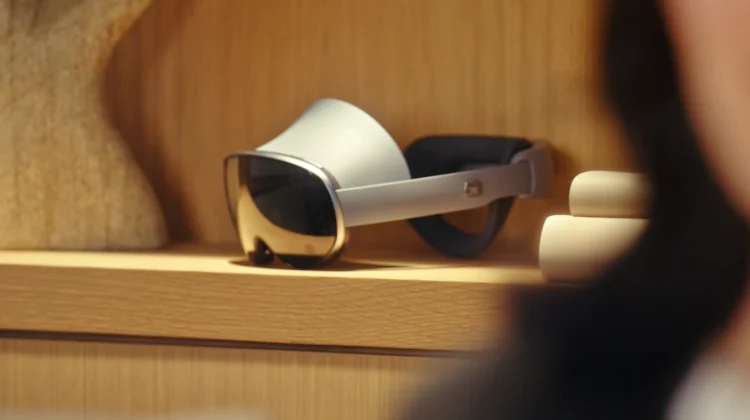
Next week, Samsung is set to unveil its “Project Moohan” XR headset – the first official Android-powered competitor to Apple’s Vision Pro. And while the headset itself is undoubtedly significant, focusing solely on this one (likely very expensive) device misses the forest for the trees. The real story, the one with far greater long-term implications for how we compute, isn’t just the hardware; it’s the official debut of Android XR, the underlying platform that will power a whole new generation of devices, including the AR glasses I believe represent the true future.
‘Project Moohan’: The flagship debut
Now, don’t get me wrong, I’m extremely excited to see the Project Moohan headset in all its glory. It’s the flagship launch vehicle for this new ecosystem, co-developed by Samsung, Google, and Qualcomm. We expect a high-end experience with a top-of-the-line display, advanced tracking, and deep Gemini integration. But with a rumored price tag likely landing somewhere between $1,800 and $2,800, it’s also going to be a niche product, much like the Vision Pro it aims to compete with.
Android XR: The foundation for what’s next
The true significance of the October 21st event is the formal arrival of Android XR. This isn’t just a tweaked version of Android; Samsung describes it as a platform “optimized with AI embedded right from the start” and “designed to scale across form factors.” That last part is key. While Moohan is a goggles-style device, Android XR is built to power everything from fully immersive headsets to, crucially, lightweight smart glasses.
And for my money, those glasses are where the real excitement lies. As I wrote back in March, while the immersive potential of headsets is interesting, the prospect of lightweight, stylish AR glasses that integrate spatial computing into our everyday lives is far more compelling. Imagine heads-up navigation from Google Maps, instant translations appearing in your field of view, or contextual information overlaid onto the real world – all without needing a bulky headset.
We’ve already seen demos of Android XR running on prototype glasses, proving the concept is well underway. These glasses represent the potential for a more ambient, accessible form of spatial computing, one that complements our reality rather than completely replacing it. They won’t have the sheer immersion of a Moohan or a Vision Pro, but they have the potential to be infinitely more useful, more often, for more people.
So, when Samsung takes the virtual stage on October 21st, pay close attention not just to the headset they reveal, but to the platform underneath it. “Project Moohan” might be the star of the show, but Android XR is the foundation upon which Google, Samsung, and Qualcomm plan to build the future of computing – a future that looks a lot more like a pair of glasses than a pair of goggles.
SUBSCRIBE TO UPSTREAM
Get Chrome Unboxed delivered straight to your inbox
Upstream is our flagship, curated newsletter with the top stories, most click-worthy deals, giveaways, and trending articles from Chrome Unboxed sent directly to your inbox a few times a week. Join 31,000+ subscribers.

