
Support our independent tech coverage. Chrome Unboxed is written by real people, for real people—not search algorithms. Join Chrome Unboxed Plus for just $2 a month to get an ad-free experience, access to our private Discord, and more. Learn more about membership here.
START FREE TRIAL (MONTHLY)START FREE TRIAL (ANNUAL)
The Samsung Galaxy XR headset is finally here! After months of anticipation, the first device built on the ambitious Android XR platform was just launched a few days ago, with impressive specs like 4K micro-OLED displays and deep Gemini integration, all for a cool $1799. It’s undeniably a landmark device, and yet, watching the launch event, I couldn’t shake the feeling that Samsung and Google weren’t treating this as the final destination, but rather as the beginning of something much bigger. The repeated emphasis on this being “just the beginning” felt less like standard marketing speak and more like a deliberate hint at what’s coming.
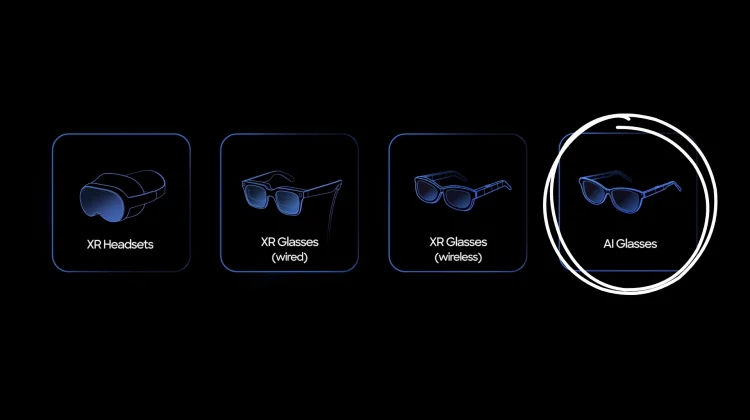
Throughout the presentation, executives from Samsung and Google consistently framed the Galaxy XR as the first step in a long-term XR journey. Phrases like “Today marks the beginning of the decade of our commitment to XR,” and Samsung explicitly stating they are developing “multiple form factors, including AI glasses,” weren’t just for hype – they felt like the core message.
This makes perfect sense when you consider the context. At $1799, the Galaxy XR is firmly positioned as a high-end, early adopter device, much like the Apple Vision Pro it competes against. It’s not aiming for mass-market adoption right out of the gate. Instead, I believe its primary role feels like that of a “lighthouse device” – a necessary, powerful piece of hardware designed to showcase the potential of the Android XR platform, attract developers, and begin building the ecosystem.
AR glasses are the goal
And this aligns perfectly with what I’ve been arguing for months. While the immersive potential of headsets like the Galaxy XR is impressive, the real revolution in spatial computing will come with lightweight, stylish AR glasses that people will actually wear around. As I’ve written before, the true value lies not in occasionally escaping reality, but in subtly enhancing it throughout our daily lives with ambient, contextual information.
The launch event itself reinforced this. Samsung didn’t just mention future glasses; they specifically name-dropped partnerships with Warby Parker and Gentle Monster—brands synonymous with fashion and wearability, not bulky tech hardware. This wasn’t an accident. It was a clear signal that the goggles we saw last night are merely the foundation.
Android XR itself is described as a platform “designed to scale across form factors.” The heavy lifting done by Samsung, Google, and Qualcomm to build this AI-native, multimodal operating system wasn’t just for a $1800 headset. It was to create the engine that will eventually power those more accessible, everyday AR glasses that represent the true potential of spatial computing integrated into our lives.
The journey starts now
So yes, the Galaxy XR is a significant milestone, and the launch event certainly felt like Samsung and Google were setting the stage for a long game. They repeatedly called this “just the beginning” and pointed towards a future that includes AI glasses built with partners like Warby Parker. It’s clear the ultimate goal is broader than just this one headset.
However, let’s not lose sight of what the Galaxy XR represents right now. It’s the only device on the planet where you can experience the brand-new Android XR platform and its deep Gemini integration today. It took years of collaboration between Samsung, Google, and Qualcomm to bring this device to market, and while the prospect of future AR glasses is exciting, we have absolutely no idea how long that development will take. It could take a while for those partnerships to bear fruit in a commercially available product.
For those who are genuinely excited about the potential of Android XR and want to be on the bleeding edge, the Galaxy XR is your ticket in. It’s the flagship device, the developer target, and the ground floor for this entire new ecosystem. Being among the first to explore its capabilities, to understand its potential, and to provide feedback will shape the future of the platform. While it carries a premium price tag, it’s also the only way to start that Android XR journey today. If you have the means and the curiosity, diving in now means experiencing the future of spatial computing on Android.
SUBSCRIBE TO UPSTREAM
Get Chrome Unboxed delivered straight to your inbox
Upstream is our flagship, curated newsletter with the top stories, most click-worthy deals, giveaways, and trending articles from Chrome Unboxed sent directly to your inbox a few times a week. Join 31,000+ subscribers.

