
Support our independent tech coverage. Chrome Unboxed is written by real people, for real people—not search algorithms. Join Chrome Unboxed Plus for just $2 a month to get an ad-free experience, access to our private Discord, and more. Learn more about membership here.
START FREE TRIAL (MONTHLY)START FREE TRIAL (ANNUAL)
Whenever a major platform shift looms on the horizon, it’s easy for tech conversations to slip into a strange, false binary: the idea that if you’re genuinely excited about where the future is heading, you must suddenly dislike or discount what came before.
For over a decade, I’ve been an unapologetic fan and advocate of Chromebooks. I use them for my daily computing workflow to this day, I test them continuously, and I’ve absolutely loved watching the platform grow.
But does getting excited for the arrival of Googlebook mean that Chromebooks are dead or that everything I’ve loved about ChromeOS for the past decade all of a sudden becomes irrelevant? Absolutely not. Loving what Chromebooks represent today and being thrilled for the Googlebook evolution aren’t contradictory positions. Instead, they are part of the exact same journey.
A decade of rooting for the underdog
I have never claimed Chromebooks were flawless machines. What I have done and what I’ll always do is celebrate the core philosophy that makes them so special: speed, simplicity, and unmatched security.
Over the years, I’ve been in the corner of ChromeOS, rooting for it to push through its limitations and become the desktop operating system I knew it could be. I cheered when Samsung brought the first 4K OLED display to the Galaxy Chromebook. I celebrated when HP engineered the first Chromebook haptic trackpad in the Elite Dragonfly Chromebook.
On the software side, tracking that forward momentum was also a thrill. Milestone updates like the addition of Virtual Desks, streamlined keyboard layouts, improved screen recording tools, and the Chromebook Plus feature suite (studio-quality mics, temporal noise reduction, and background blur) made ChromeOS noticeably better year after year. Finding those features and seeing them come to devices was so much fun!
I wanted Chromebooks to sit proudly on store shelves right beside MacBooks and high-end Windows machines and prove that a lightweight, cloud-first platform could easily hold its own. And for a long time, that steady march forward was undeniable. As better hardware kept arriving and features continued to evolve, I really thought there would eventually be a day when Chromebooks would break through in the consumer space.
The plateau no one could ignore
Then, about a year ago, the ecosystem hit a visible plateau. The rapid cadence of major, consumer-facing software features slowed down significantly to almost none. Ambitious, envelope-pushing hardware releases became few and far between. While budget and mid-range devices continued to dominate in education and enterprise, the premium and mid-range consumer space felt like it had reached an artificial ceiling.
It began to feel as though Google was content letting Chromebooks remain solid, reliable computing appliances without solving their remaining structural pain points. Persistent frustrations like containerized Widevine DRM restrictions that cripple offline media downloads or the goofy tablet mode UI that still needs an overhaul all remain unaddressed year after year.
But acknowledging that very-real stagnation isn’t the same as saying the whole thing has been a failure or that my enthusiasm for the platform was a waste of time; it’s just being realistic about where ChromeOS reached its natural architectural limits and seeing the natural evolution of that process unfolding.
Googlebook is the next evolution
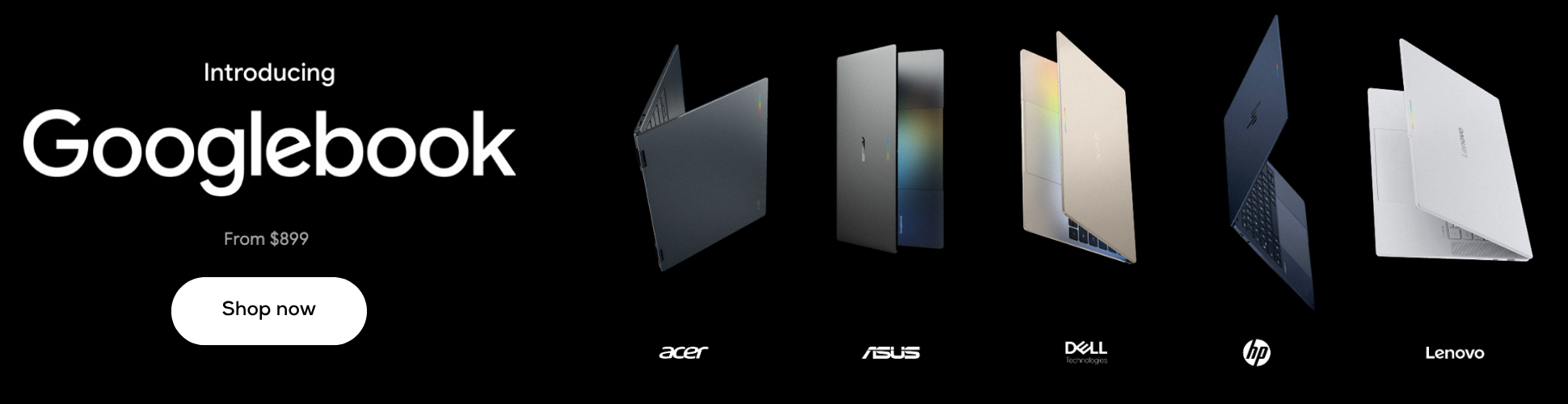
And that is why the emergence of Googlebook and is so compelling right now. Google is rebuilding their laptop foundation from the ground up on native Android to conquer the exact hurdles ChromeOS couldn’t seem to get over.
Being excited for Googlebook comes from the exact same place as my excitement for every major ChromeOS milestone over the past ten years. I’m rooting for Googlebook to close the desktop gaps that still remain with ChromeOS, and to do so on some very exciting new hardware.
The place where Googlebook will have to prove itself to me is in the web browser department. My daily productivity relies on a fast, responsive, full-fat desktop Chrome browser. For Googlebook to succeed in my daily routine, it has to deliver the same lightning-fast web speed and ease of use that made me fall in love with ChromeOS in the first place. I think it will accomplish that task, but I don’t want to fully assume Googlebook will get everything right from day one, either.
I suppose the point of all this is to say clearly that my excitement for the next era of Google hardware doesn’t erase a decade of ChromeOS growth and development. Instead, it really just feels like the next logical chapter. And I’m not going to be shy about my enthusiasm for this next era. And I hope you’ll come along for the ride.
SUBSCRIBE TO UPSTREAM
Get Chrome Unboxed delivered straight to your inbox
Upstream is our flagship, curated newsletter with the top stories, most click-worthy deals, giveaways, and trending articles from Chrome Unboxed sent directly to your inbox a few times a week. Join 31,000+ subscribers.

