
Support our independent tech coverage. Chrome Unboxed is written by real people, for real people—not search algorithms. Join Chrome Unboxed Plus for just $2 a month to get an ad-free experience, access to our private Discord, and more. Learn more about membership here.
START FREE TRIAL (MONTHLY)START FREE TRIAL (ANNUAL)
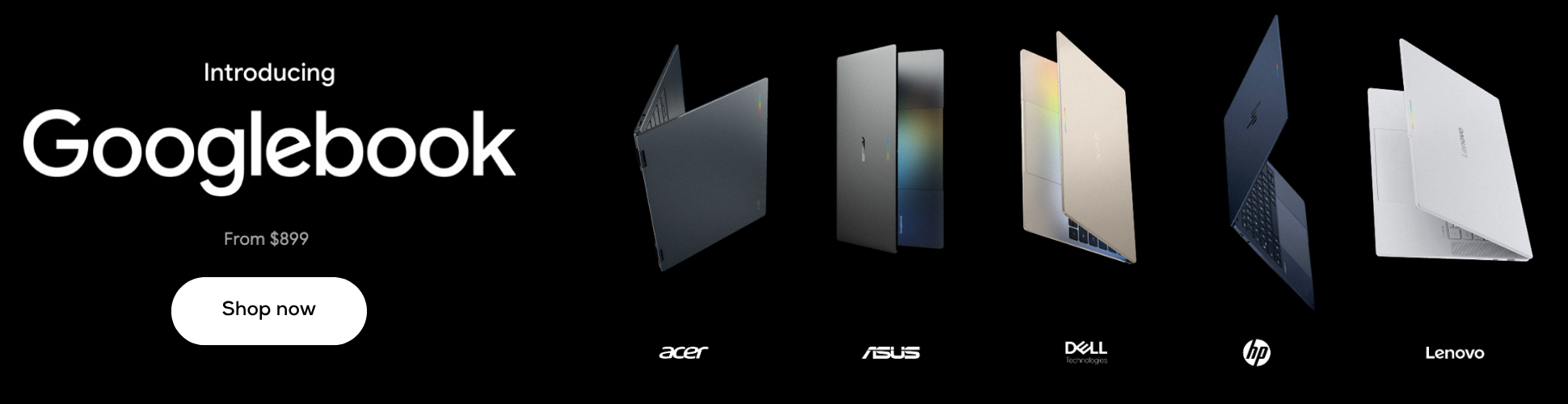
We have the hardware category name, we know the underlying tech stack, and we’ve even seen early leaks of the desktop environment. But one massive question remains completely unanswered following The Android Show: what exactly is the operating system running on a Googlebook going to be called?
During our recent interview with Google VP John Maletis, he explicitly stated that they were focused on announcing the hardware category first and would share details on the operating system “in the coming months.” That deliberate phrasing tells us a lot. It confirms that this software experience is getting its own distinct identity, and Google has to brand it something. Here is a look at a few potential naming scenarios as we wait for the official reveal.
Simply called Android
The most straightforward answer would be that it’s simply Android. We know Googlebook is running on the Android tech stack, utilizing the Android kernel, and running native Android apps.
However, if it were simply going to be called “Android 16” or “Android Desktop,” I firmly believe Google would have just revealed that during the initial announcement. The fact that they are holding the name back implies they want to distinguish this laptop-first experience from the software running on your Pixel phone or Galaxy tablet.
Following the Apple naming scheme
If Google looks to its biggest competitor for inspiration, the most logical naming convention is right there for the taking: GooglebookOS.
Apple has found success in siloing its operating systems by hardware type – macOS, iPadOS, tvOS, and watchOS. While “GooglebookOS” is a bit of a mouthful and frankly not my favorite option, it undeniably makes sense. It clearly communicates exactly what the software is and what hardware it belongs to, avoiding any confusion with the mobile Android ecosystem.
The ‘powered by’ approach
Another possibility is that Google tries to move away from a traditional operating system name entirely. We keep hearing the phrase “intelligence system” thrown around by Google executives. Could the marketing simply be: Googlebook, powered by Gemini Intelligence?
While that works well for a billboard, it doesn’t really work for a Best Buy spec sheet. Historically, Google definitely gravitates toward OS branding. Just look at Wear OS, Android TV, Google TV, and Android Auto. Consumers and enterprise IT admins alike need a tangible name for the software they are buying, managing, and updating.
Perhaps they are still deciding
The radio silence on the name genuinely makes me wonder if the team in Mountain View is still debating the final moniker behind closed doors. Naming a brand-new operating system is a monumental task, especially one designed to eventually succeed the highly recognizable ChromeOS brand.
Whatever they end up calling it, the name carries a lot of weight. We’ll be keeping a very close ear to the ground for any trademark filings or leaks that might give away the secret before Google’s official announcement later this year, but I feel like we’ll have an answer to all these questions well before the official fall reveal.
SUBSCRIBE TO UPSTREAM
Get Chrome Unboxed delivered straight to your inbox
Upstream is our flagship, curated newsletter with the top stories, most click-worthy deals, giveaways, and trending articles from Chrome Unboxed sent directly to your inbox a few times a week. Join 31,000+ subscribers.

