

Support our independent tech coverage. Chrome Unboxed is written by real people, for real people—not search algorithms. Join Chrome Unboxed Plus for just $2 a month to get an ad-free experience, access to our private Discord, and more. Learn more about membership here.
START FREE TRIAL (MONTHLY)START FREE TRIAL (ANNUAL)
We are rapidly approaching the official release date of Google’s highly-anticipated Pixel Fold smart phone. Exciting as that is, most consumers aren’t in the market for a $1,800 flexible handset, yet. No, more buyers are likely eyeing October and the release of Google’s upcoming Pixel 8 and Pixel 8 Pro that will feature the next-gen Tensor 3 SoC.
Rumor has it, the new Tensor 3 chip was being built using Samsung’s 3nm process which could greatly increase battery life while simultaneously boosting performance. However, recent reports point to a third-gen 4nm SoC from Samsung being used as the foundation of Google’s “in-house” smartphone chipset. Either way, Tensor 3 will hopefully bring some overall improvements to an already formidable SoC lineup for Google.
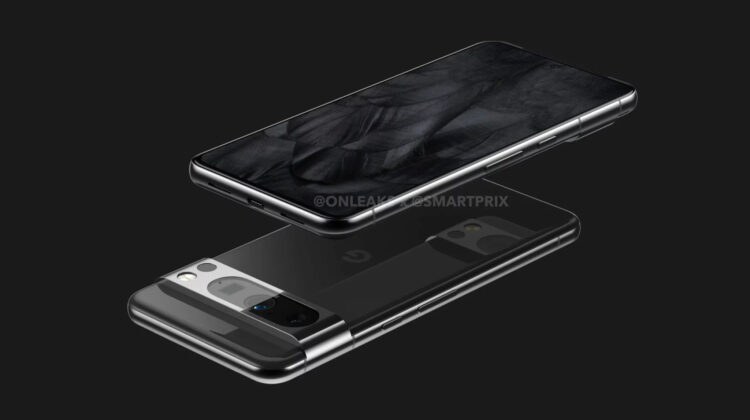
Back in March, full-blown renders of the Pixel 8 surfaced weeks ahead of Google I/O and this week, news emerged that Google may be bringing a solid upgrade to the cameras on the next flagship Pixel smart phones. With the release of the Pixel 6, Google made a massive upgrade to the aging Sony IMX363 image sensor by replacing it with the Samsung ISOCELL GN1. Combined with Google’s camera wizardry and machine learning, this kept the Pixel 7 Pro at or near the top of the smart phone camera list for 2022.
Yes, the Pixel 7 Pro has an amazing camera but technology always moves forward and Google won’t stay ahead in the photo department if its new phones don’t move the needle forward as well. An exclusive from Android Headlines tells us that Google is doing exactly that with a newer primary sensor on the upcoming Pixel 8 and Pixel 8 Pro. The new Pixel will swap out the ISOCELL GN1 for the newer ISOCELL GN2 from Samsung.
Why does it matter? Well, newer isn’t always better but in the case of phone sensors and tech in general, it usually is. That is the case with the ISOCELL GN2. The new sensor can capture roughly 35% more light which should result in better low-light photography and faster shutter speeds should assist in reducing blurring.
The sensor does support 8K@30fps which is awesome because the Tensor 3 SoC does the same. However, as Kamila Wojciechowska points out, this may not make its way to consumers due to the thermal issues introduced by filming video at 8K/30fps. The ISOCELL GN2 sensor also features Staggered HDR which reduces the delay between frames. This speeds up capture and reduces ghosting. Combined with Google’s insane image processing, this could result in even better quality, faster shots.
In addition to the upgraded primary sensor, the ultra-wide camera on the Pixel 8 Pro will make a huge leap from the current IMX386 to the 64MP Sony IMX787. This is the same sensor that’s used for the primary camera on the Pixel 7a and should greatly enhance image quality. Those are some great and quite welcome upgraded coming to the next Pixel handset. To read more about what’s new with the upcoming Pixel 8 and Pixel 8 Pro, check out Kamila’s post on Android Authority. Stay tuned for updates on the Pixel 8 family and keep an eye out for our first look at the Pixel Fold when it hits shelves in less than two weeks.
Image Credit: Onleaks x Smartprix

