

Support our independent tech coverage. Chrome Unboxed is written by real people, for real people—not search algorithms. Join Chrome Unboxed Plus for just $2 a month to get an ad-free experience, access to our private Discord, and more. Learn more about membership here.
START FREE TRIAL (MONTHLY)START FREE TRIAL (ANNUAL)
Noting the latest batch of updates Google rolled out to Gemini today, the pace of innovation is in this space is pretty staggering; and it has potential to change how we interact with much of the tech we use every single day.
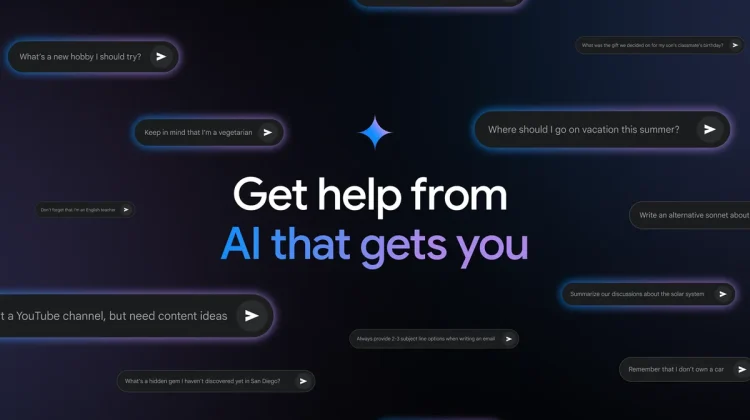
To that end, Google is launching Gemini with personalization – an experimental feature that aims to make Gemini less of a tool and more of a natural extension of your digital self. Think of it as not just about getting answers; but about getting your answers.
So, how does it work? Initially, Gemini with personalization will connect with your Google Search history. With your permission, Gemini can analyze your past searches to provide responses that are more tailored and relevant to your specific needs and interests. Think about that for a minute. Instead of sifting through general results, you get insights and recommendations that are directly informed by your own search behavior.
Google plans to expand this capability in the coming months, allowing Gemini to connect with other Google apps and services like Photos and YouTube. This will give Gemini a much broader understanding of your activities and preferences, leading to even more personalized and helpful responses.
Of course, with increased personalization comes increased responsibility when it comes to privacy. Google says they’ve implemented robust privacy safeguards to ensure you’re in control of your data. Here are a few key points:
- Clear Notice: Gemini will ask for your explicit permission before connecting to your Search history or other apps.
- Transparency: Gemini will provide details on how it personalizes responses and which data sources were used.
- Data Control: You can easily disconnect Gemini from your Search history at any time.
Gemini with personalization is launching as an experimental feature for Gemini and Gemini Advanced subscribers on the web, with a gradual roll-out to mobile. It’s available in over 40 languages and most countries and is an exciting development for AI and for how we might use it in our daily lives. It remains to be seen how well it performs in real-world scenarios, but the potential is definitely there.
As with all things Google, many will be uncomfortable with the AI model having access to more apps and more search data, and that is completely fine. If you want to revoke access at any time, you can opt out of all of this completely. In my eyes, Google needs to show users some true benefit to this new feature if mass adoption is expected. If used incorrectly, this could become yet another echo chamber where we don’t see content outside our already-formed search habits. So, the jury is out on this one.
SUBSCRIBE TO UPSTREAM
Get Chrome Unboxed delivered straight to your inbox
Upstream is our flagship, curated newsletter with the top stories, most click-worthy deals, giveaways, and trending articles from Chrome Unboxed sent directly to your inbox a few times a week. Join 31,000+ subscribers.

