

Support our independent tech coverage. Chrome Unboxed is written by real people, for real people—not search algorithms. Join Chrome Unboxed Plus for just $2 a month to get an ad-free experience, access to our private Discord, and more. Learn more about membership here.
START FREE TRIAL (MONTHLY)START FREE TRIAL (ANNUAL)
Last week, we caught a glimpse of the new Magic Pointer app surfacing on the Play Store, giving us a brief look at the app-driven AI-powered cursor coming to Googlebook later this year. But a brand new deep dive just blew the doors wide open on exactly how this contextual tool operates under the hood.
According to a detailed Magic Pointer app teardown from Android Authority, Google is relying on some incredibly robust Gemini system prompts to act as the brains behind the Magic Pointer experience, bypassing the need to build the tool entirely from scratch with low-level code. Here is everything they found in the code strings about how your next smart cursor will actually function.
Activation and “Wiggle” Gestures
First up, the teardown confirms exactly how we will summon the assistant. Users can pull up Magic Pointer using a simple, dedicated keyboard shortcut: Meta + g.
However, if you prefer to keep your hands on the trackpad, Google is implementing a “cursor wiggle” action to wake the AI. For those worried about accidentally triggering the assistant while frantically moving the mouse across the screen, the code reveals that Google is including sensitivity sliders for the wiggle gesture as well as the ability to toggle it off entirely if it gets in your workflow’s way.
The Four Pillars of User Intent
When you highlight a region of your screen, Magic Pointer acts as a direct pipeline into Gemini, generating up to three highly relevant “suggestion chips.” The teardown shows that Gemini is instructed to analyze your selection and map it to four core capabilities:
- To Understand: Sense-making and explanation. (e.g., “Explain this chart” or “Summarize this thread”)
- To Transform: Editing, formatting, and converting content. (e.g., “Rewrite to sound professional” or “Turn these stats into a table”)
- To Ideate: Brainstorming next steps that go beyond the user input. (e.g., “Plan a meal with these ingredients” or “Is this a good price?”)
- To Execute: Delegating real-world or system tasks to the AI. (e.g., “Create a Calendar event,” “Order food,” or even managing deep system settings like Wi-Fi and Bluetooth)
Strict Guardrails and System Limitations
Perhaps the most fascinating part of the teardown is the massive list of rules and guardrails Google uses to keep Gemini’s output clean and actionable.
The AI is strictly limited to generating a maximum of three suggestion chips, each capped at 45 characters to keep the UI from feeling cluttered. It is instructed to write from the user’s perspective (using “I” or “me”) and must avoid broad, generic filler text like “Tell me more.”
Crucially, there is a strict Gemini-only guardrail. The AI is forbidden from suggesting actions that require external, unsupported software (like telling you to “Create a mock in Figma”). It also actively avoids standard OS app routing; instead of telling you to simply “Open Google Calendar,” it will proactively suggest “Draft a calendar invite.” Add in strict safety protocols and mandated gender-neutral pronouns when analyzing photos of people, and it is clear Google is putting a massive emphasis on a polished, safe experience.
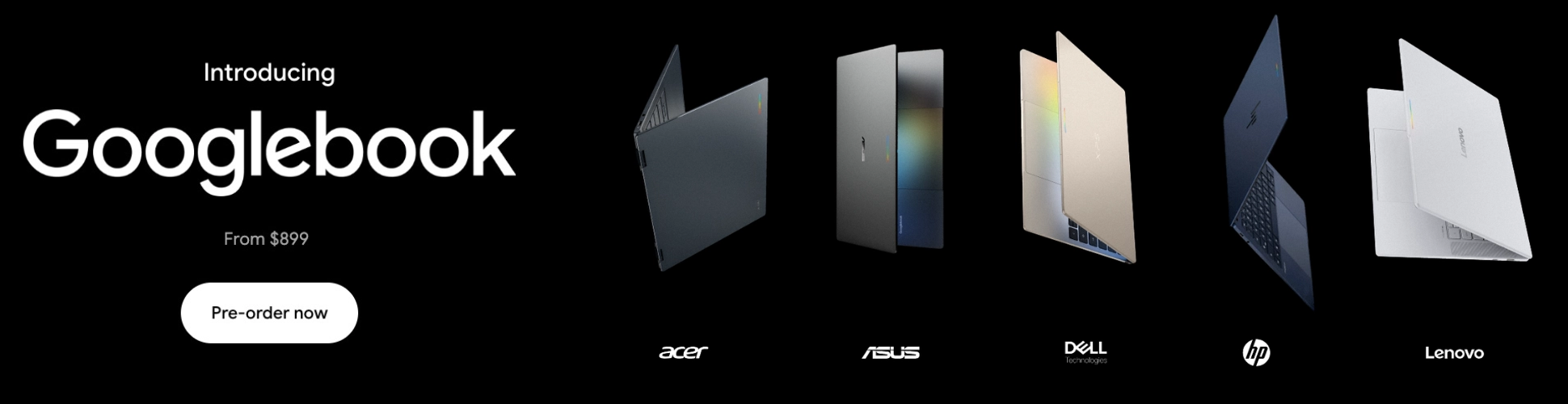
It is incredible to see how much of this next-generation desktop experience is being driven by natural language prompting on the backend. As we inch closer to the official Googlebook launch this fall, teardowns like this at least give us small looks into all the things Google is doing to differentiate the Googlebook experience from the rest of the laptop competition.
SUBSCRIBE TO UPSTREAM
Get Chrome Unboxed delivered straight to your inbox
Upstream is our flagship, curated newsletter with the top stories, most click-worthy deals, giveaways, and trending articles from Chrome Unboxed sent directly to your inbox a few times a week. Join 31,000+ subscribers.

