

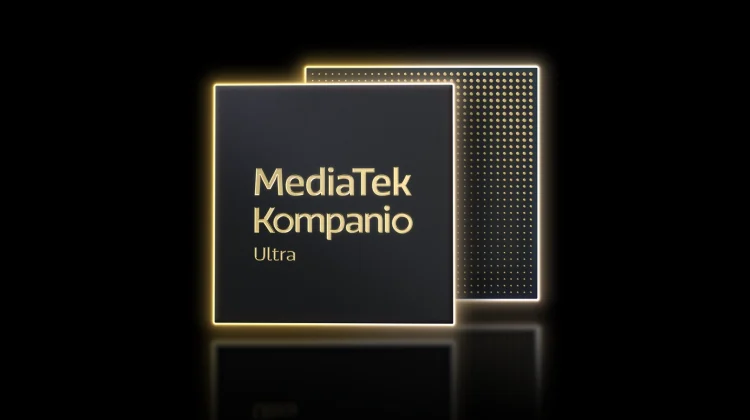
Yesterday’s announcement of the new MediaTek Kompanio Ultra was a big deal in the Chromebook world, but the more I’ve sat with it, the more I think this SoC could be an absolute game-changer for upcoming Chromebooks. Sure, this processor has speed and all sorts of AI capabilities, but there’s a factor at play in all of this that I think will end up having a massive impact on future devices for years to come. Let me explain.
The Android factor
For years now (9, to be specific), we’ve viewed the ability to run Android apps more efficiently as one of the major upsides to ARM chips in Chromebooks. Though our ARM processors up to now have largely been med-low-end chips, they’ve all been pretty solid with Android apps to the extent that ChromeOS allows.
But the implementation of Android on Chromebooks has long been a problem even for ARM-powered devices. Some apps are completely incompatible, some are broken, and some games see the Chromebook as an emulator and won’t allow gameplay to happen simply based on the Android Framework implementation in ChromeOS. It’s a broken mess in a lot of ways.

But the coming Android kernel – though still at least 6 to 12 months off at this point – should alleviate all of this. Instead of running Android as a framework in a container, Chromebooks will instead be grounded in Android at the root and should be able to theoretically behave like an Android device when it comes to launching and running apps.
So, instead of wondering if an app from the Play Store will open or run at all on a Chromebook, we should end up with full confidence that all apps will work just fine. And then it simply comes down to the developer taking larger screens seriously enough to adjust their UI to make use of the screen real estate found on Chromebooks.
The Kompanio Ultra will take advantage
Once this all plays out, devices that can run the full desktop setup of ChromeOS while maintaining the ability to run Android apps as well as an Android tablet or phone will very much be able to leverage all the power and speed of a chip like the Kompanio Ultra in a lot of interesting ways.
I can think of quite a few Android apps I avoid on my Chromebook because they just run poorly; but with the new Android Kernel and a processor that is wildly fast, I’d be FAR more open to utilizing Android applications on a daily basis. At the moment, it isn’t the app options that turn me off: it’s the lack of consistency from a functionality standpoint.
And if that barrier completely erodes with the Android Kernel, a chip like the Kompanio Ultra will be perfectly situated to easily and seamlessly run whatever Android app I need right in ChromeOS. Clearly, Android and Android apps run best on ARM, so finally having a flagship ARM processor that runs ChromeOS like butter, has long battery life and can smoothly handle Android apps as well (again, with the Android kernel in place) puts MediaTek in a very unique spot moving forward with the Kompanio Ultra.
There’s still a lot to work out, sure, but this future is definitely converging. I’d wager we’ll see a couple MediaTek Kompanio Ultra devices well before we see the Android kernel on Chromebooks, but the wait for this firmware overhaul won’t be wildly long. I’d say within a year of the release of these Kompanio Ultra devices to the public, we could start to finally see motion in the transition to the Android kernel. And once that happens, these ARM-powered Chromebooks will absolutely be the ones to get.
Join Chrome Unboxed Plus
Introducing Chrome Unboxed Plus – our revamped membership community. Join today at just $2 / month to get access to our private Discord, exclusive giveaways, AMAs, an ad-free website, ad-free podcast experience and more.
Plus Monthly
$2/mo. after 7-day free trial
Pay monthly to support our independent coverage and get access to exclusive benefits.
Plus Annual
$20/yr. after 7-day free trial
Pay yearly to support our independent coverage and get access to exclusive benefits.
Our newsletters are also a great way to get connected. Subscribe here!
Click here to learn more and for membership FAQ

