

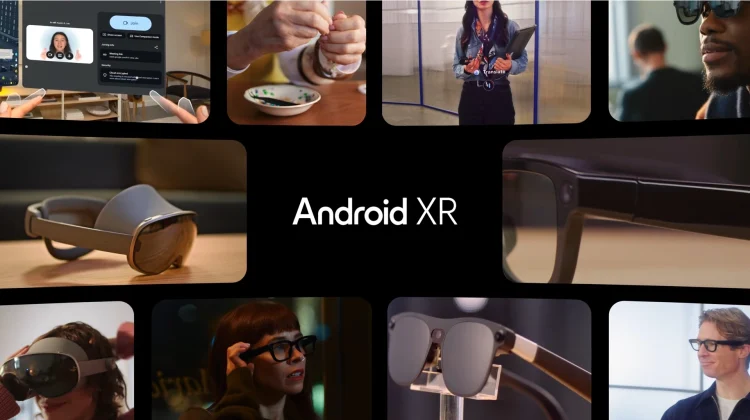
Smart glasses were everywhere at CES 2026, marking a clear shift in where the industry expects consumer technology to go next. While third-party hardware is already hitting the shelves, we have been waiting for Google to show its hand regarding how it will integrate these wearables into the broader Android and Gemini ecosystems. Thanks to a recent leak of a dedicated “Glasses” companion app Android Authority discovered within the Android Studio preview, we now have a much clearer picture of how Google intends to manage the next generation of smart eyewear.
The companion app was uncovered by searching through system images in the latest Canary preview of Android Studio. While the software requires actual hardware to complete the setup process, a deep dive into the code strings and internal assets reveals exactly what Google is prioritizing: seamless communication, privacy-first AI, and a flexible approach to different hardware form factors.
Gemini as a conversational gatekeeper
One of the most compelling features revealed in the app is “Conversation Detection.” According to the code, Gemini will be able to automatically silence spoken notifications the moment the glasses detect that you are engaged in a real-world conversation. This addresses one of the primary friction points of smart glasses—the intrusive nature of a voice assistant chirping in your ear while you are trying to talk to someone else.
<string name="conversation_detection_setup_title">Silence notifications during conversations</string>
<string name="conversation_detection_setup_description">"Gemini will automatically silence spoken notifications when you're talking."</string>
<string name="conversation_detection_setup_info">To protect your privacy, all conversation detection processing happens on your glasses. No raw audio, images, or conversation data is shared with Google or other services.</string>
Google is clearly leaning into its on-device AI capabilities here to solve the privacy concerns that naturally arise with “always-listening” hardware. The app explicitly states that all conversation detection happens locally on the glasses. No raw audio, images, or conversation data is shared with Google’s servers, which is a necessary foundation if these devices are ever going to gain mainstream trust.
<string name="enable_context_aware_notifications">Conversation detection</string>
<string name="enable_context_aware_notifications_description">"Pause notifications when the glasses detect you're in a conversation."</string>
<string name="enable_context_aware_notifications_description_audio_glasses">"Pause spoken notifications when the glasses detect you're in a conversation."</string>
A tiered hardware approach
The leak also confirms that Google is preparing for a variety of hardware styles, ranging from simple audio-only frames to high-end models with displays. Interestingly, there is a “displayless mode” toggle even for models equipped with screens, allowing users to fall back to a purely audio-based experience when they want to minimize distractions.
<string name="settings_displayless_mode_description">Turns off the glasses display</string>
<string name="settings_displayless_mode_title">Audio-only mode</string>
However, not all glasses will be created equal in the eyes of Google’s AI. Code strings suggest that certain Gemini features may be restricted based on the hardware’s capabilities, with specific warnings for “ineligible” devices. This suggests that Google may be planning a tiered ecosystem—perhaps similar to how we see “Chromebook Plus” vs. standard Chromebooks—where only higher-end models with specific NPUs can handle the full suite of Gemini’s proactive assistant features.
<string name="hardware_ineligible_desc">Your glasses are not eligible to use Gemini. New glasses required to resolve.</string>
<string name="hardware_ineligible_title">Gemini features may be limited</string>
High-fidelity capture and safety
On the hardware side, the app points toward some impressive camera capabilities. The settings include options for 1080p video as well as an “experimental” 3K resolution. High-resolution capture in a wearable form factor has always been a thermal and battery challenge, so seeing 3K as an option suggests that Google is confident in the efficiency of its latest silicon.
<string name="video_resolution_title">Video resolution</string>
<string name="video_resolution_option_1080p">1080P</string>
<string name="video_resolution_option_3k">3K (experimental)</string>
To address the social stigma of “glassholes” and surreptitious recording, Google is implementing a hardware-level safety check. The app contains code designed to detect if the “recording” LED on the front of the glasses is being blocked or covered. If the sensor can’t verify that the light is visible to others, it appears the glasses will prevent the camera from recording altogether.
This companion app feels like the connective tissue Google needs as it prepares to launch its broader Android XR platform later this year. By building a robust, Gemini-powered foundation that handles notifications and privacy gracefully, Google is positioning its smart glasses not as a standalone gimmick, but as a proactive extension of the phone. Whether you are looking for a simple pair of audio-only frames for navigation or a full 3K-capable AR setup, the software infrastructure is clearly being laid out to support a very ambitious future for Google’s wearables.
Join Chrome Unboxed Plus
Introducing Chrome Unboxed Plus – our revamped membership community. Join today at just $2 / month to get access to our private Discord, exclusive giveaways, AMAs, an ad-free website, ad-free podcast experience and more.
Plus Monthly
$2/mo. after 7-day free trial
Pay monthly to support our independent coverage and get access to exclusive benefits.
Plus Annual
$20/yr. after 7-day free trial
Pay yearly to support our independent coverage and get access to exclusive benefits.
Our newsletters are also a great way to get connected. Subscribe here!
Click here to learn more and for membership FAQ

