

Support our independent tech coverage. Chrome Unboxed is written by real people, for real people—not search algorithms. Join Chrome Unboxed Plus for just $2 a month to get an ad-free experience, access to our private Discord, and more. Learn more about membership here.
START FREE TRIAL (MONTHLY)START FREE TRIAL (ANNUAL)
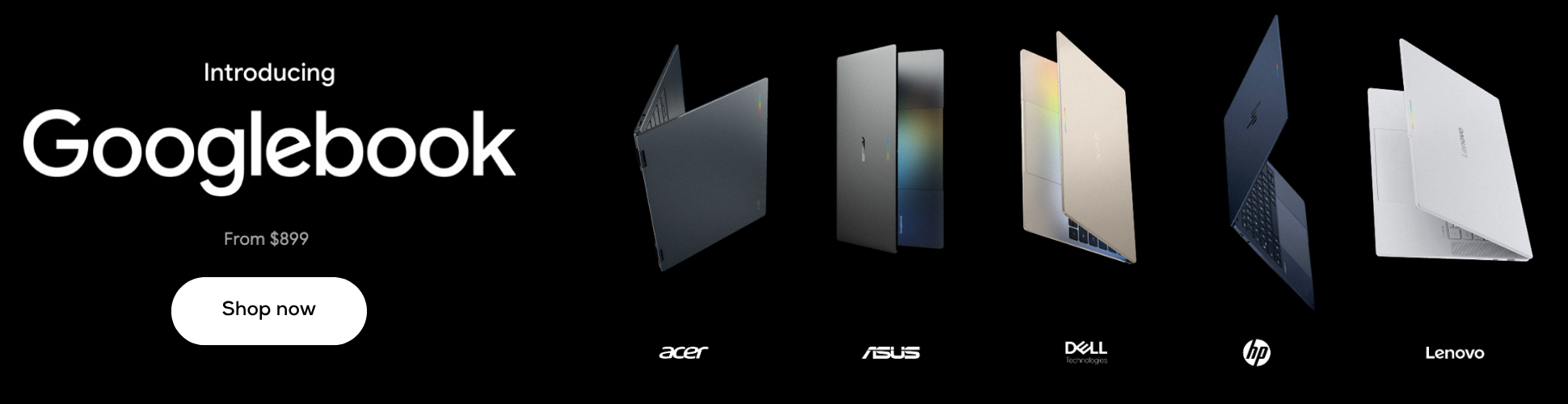
When Google first pulled back the curtain on Googlebook, most of our attention naturally gravitated toward the laptops themselves. Having covered the evolution of Chromebook and Chromebook Plus hardware for well over a decade, we were super excited to see the strict baseline hardware standards Google has laid out. Things like powerful silicon and the triumphant return of the lid-mounted Glowbar signal a massive shift in how premium laptops from Google’s camp are designed.
However, a technical listing and FCC certification for an unannounced Lenovo AI Mouse M830 recently gave us our first peek at a side of this platform I hadn’t even really considered up until now. As it turns out, Google isn’t just dictating hardware standards for laptops. They are helping OEMs build a dedicated Googlebook accessory ecosystem from day one.
The leaked wireless mouse sports distinct Googlebook branding on the chassis, an RGB light strip, and a dedicated physical AI Key positioned right below the scroll wheel. Having tested lots of third-party ChromeOS peripherals over the years (many of which were just generic USB accessories rebadged for Chromebooks), seeing a major OEM build a purpose-built peripheral before the OS even hits store shelves got my gears turning: if Google is establishing strict hardware standards for Googlebooks, what will Googlebook Certified third-party accessories look like as this ecosystem matures?
Dedicated hardware triggers for Gemini and Magic Pointer
The most obvious addition to any Googlebook-certified peripheral is a physical entry point for Gemini Intelligence. On the leaked Lenovo AI Mouse, that dedicated AI Key will most likely trigger platform-specific features like Magic Pointer or summon Gemini instantly without forcing you to utilize any keyboard shortcuts.
In my daily testing of desktop AI tools across various Chromebooks, I’ve consistently found that friction kills adoption. If an AI feature requires navigating sub-menus or wrestling with complex key combinations, users simply stop using it.
As hardware partners like Logitech develop peripherals for Googlebook, dedicated hardware keys for Gemini will likely become baseline requirements across devices wireless mice, keyboards, and USI pens. Having a single button on a mouse to instantly trigger contextual actions hits that crucial sweet spot of being easy to find, easy to use, and genuinely useful.
External Glowbar docks and ambient indicators
The return of the Glowbar on Googlebook lids is one of my absolute favorite hardware callbacks, but its functionality is limited the moment you plug your laptop into a desktop setup. When you connect a Googlebook to an external display or tuck it into a vertical stand in clamshell mode, that lid-mounted light strip could easily get hidden away.
This opens up a fascinating opportunity for third-party accessory makers to build external, Glowbar-enabled desktop peripherals. Imagine a Thunderbolt or USB-C dock sitting under your monitor featuring a mirrored ambient Glowbar.
In our sit-down chat with Google VP John Maletis, he noted that the Glowbar is designed to offer functional light effects tied to active workflows. An external dock could quietly pulse when Gemini is processing a background research task, glow to alert you of incoming notifications, or display real-time charging status while your laptop remains closed.
Standardized stylus protocols and creative tools
With Gemini Notebook (formerly NotebookLM) coming preinstalled and built to take full advantage of side-by-side multimodal workflows, pen input is going to play a massive role in the Googlebook era. Leaks pointing toward a “Lenovo Pen Pro for Googlebook” suggest that Google is establishing strict latency and pressure-sensitivity baselines for digital styluses.
In past testing across various ChromeOS detachables and convertibles, fragmented stylus standards created inconsistent Palm Rejection and annoying input lag depending on which third-party pen you bought. A standardized Googlebook stylus protocol across all OEM partners would guarantee that whether you buy an ASUS 2-in-1 or a Lenovo detachable, your stylus experience remains fast and reliable. Adding low-latency drawing mechanics, haptic feedback, and customizable side buttons for AI tool swapping will turn Googlebooks into serious creative tools right out of the box.
A unified ecosystem built for real-world productivity
For years in the Chromebook space, accessories were largely an afterthought and felt like generic PC gear that happened to work when plugged in. With Googlebook, Google is taking a page out of the premium hardware playbook by orchestrating a cohesive, certified accessory ecosystem from day one.
If the Lenovo AI Mouse is any indication, the peripherals surrounding Googlebook are going to be just as thoughtful and integrated as the laptops themselves. We will be testing these peripherals hands-on as soon as review units land in the studio, so stay tuned for our full real-world breakdowns as we head toward launch this fall.
SUBSCRIBE TO UPSTREAM
Get Chrome Unboxed delivered straight to your inbox
Upstream is our flagship, curated newsletter with the top stories, most click-worthy deals, giveaways, and trending articles from Chrome Unboxed sent directly to your inbox a few times a week. Join 31,000+ subscribers.

