


Support our independent tech coverage. Chrome Unboxed is written by real people, for real people—not search algorithms. Join Chrome Unboxed Plus for just $2 a month to get an ad-free experience, access to our private Discord, and more. Learn more about membership here.
START FREE TRIAL (MONTHLY)START FREE TRIAL (ANNUAL)
If there is one thing we know about Google’s Chromebook hardware development cycle, it is that they are always building for the future. While the current crop of Chromebook Plus devices offers plenty of power, the Chromium repositories have just revealed that Google is already looking ahead to Intel’s next major architectural leap: Nova Lake.
Work has officially begun on a brand new baseboard codenamed Atria, and the code explicitly confirms exactly what kind of silicon will be powering it.
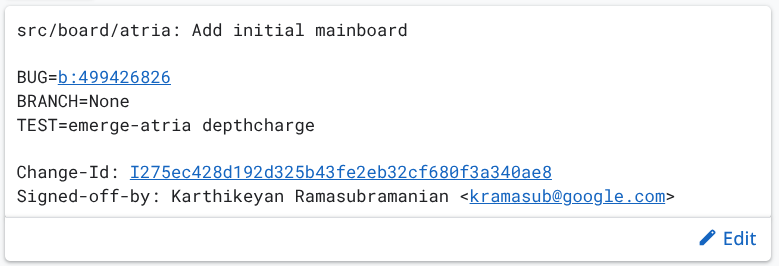
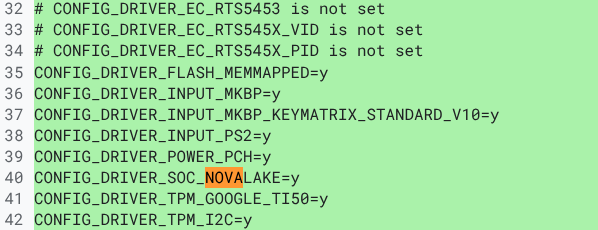
While initial board files can sometimes be vague, the initial config for Atria leaves no room for speculation. Tucked right into the driver configurations is a very clear nod to the SoC this board will be housing. And just like that, the Nova Lake era of ChromeOS hardware has officially begun.
Intel’s “Lakes” can get confusing: here’s what to expect from Nova Lake
Expected to be branded as the “Core Ultra Series 4,” Intel Nova Lake represents a massive architectural overhaul for Intel. While the desktop chips are scaling up to wild 52-core configurations, the mobile chips most likely headed to devices like ‘Atria’ are going to benefit from three major next-gen architectures:
- Coyote Cove & Arctic Wolf: These are the new P-Cores (Performance) and E-Cores (Efficiency) that are reportedly delivering significant Instructions Per Clock (IPC) improvements over current generations.
- Xe3 Graphics: Nova Lake will upgrade to Intel’s new Xe3 architecture, providing a massive boost to integrated graphical performance and gaming capabilities.
- Next-Gen NPU6: AI is obviously super important these days, and Nova Lake is packing an NPU capable of up to 74 TOPS (Tera Operations Per Second). For context, that absolutely crushes the current 40 TOPS requirement for something like Microsoft’s Copilot+ PCs.
A good fit for ‘Aluminium OS’
Everyone is clearly thinking it, so let’s talk about the elephant in the room with major new development boards hitting the Chromium Gerrit. We know that Google is in the process of re-baselining ChromeOS on a desktop-class Android foundation: a massive undertaking internally referred to as Project Aluminium.
By the time Nova Lake chips actually hit the market (likely late 2026 into 2027), Aluminium OS should be maturing out of its initial launch phase. An operating system that merges Android’s massive app ecosystem with ChromeOS’ desktop savvy and most likely lots of on-device AI processing via Gemini is going to need serious horsepower.
A device built on the Atria baseboard and packing massive NPU processing power and top-tier Xe3 graphics is the sort of hardware upgrade from Intel I’d expect and exactly like the kind of flagship, future-proof hardware Google needs to prove that Aluminium OS can go toe-to-toe with the best Windows and MacOS machines on the market.
We will be keeping a very close eye on Atria as development continues. If this is the starting line for Nova Lake, we can expect a whole new family of high-end devices to start popping up in the Gerrit very soon. Stay tuned!
SUBSCRIBE TO UPSTREAM
Get Chrome Unboxed delivered straight to your inbox
Upstream is our flagship, curated newsletter with the top stories, most click-worthy deals, giveaways, and trending articles from Chrome Unboxed sent directly to your inbox a few times a week. Join 31,000+ subscribers.

