

The momentum behind Google’s ‘Aluminium’ project (the massive transition of ChromeOS to the Android kernel) is starting to take serious shape here in the beginning of 2026. We’ve already been tracking Lenovo’s heavy hitters, the ARM-powered ‘Sapphire’ and the Intel-powered ‘Ruby’. Today, a new player has appeared in the Chromium Gerrit, and it looks like Acer is ready to throw its hat into the flagship ring with a new board codenamed ‘Moonstone’.
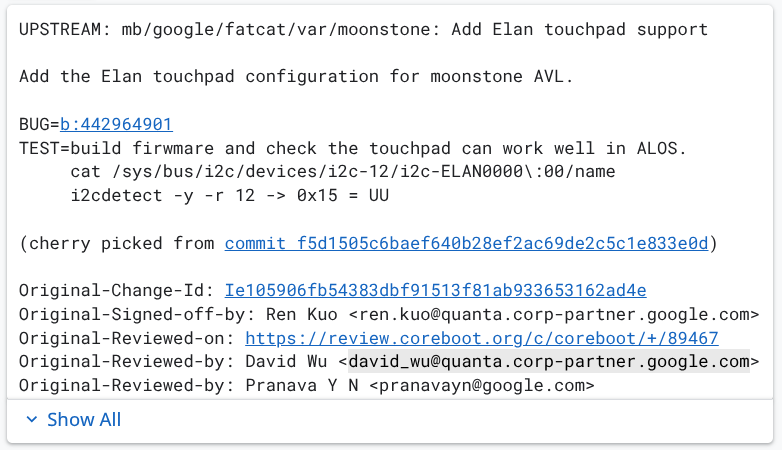
Just like the boards we’ve uncovered previously, ‘Moonstone’ isn’t just another mid-range Chromebook. The evidence suggests this is a high-end device designed specifically to help debut Google’s new vision for desktop Android.
Panther Lake under the hood
First and foremost, the technical foundation of ‘Moonstone’ is elite. The Gerrit commits confirm that it is based on the ‘Fatcat’ baseboard. As we’ve established with ‘Ruby’, ‘Fatcat’ is the development board for Intel’s next-generation Panther Lake silicon (likely the Core Ultra Series 3).
By using Panther Lake, Acer is ensuring ‘Moonstone’ has the NPU horsepower required to handle the AI-heavy demands of Aluminum OS. With the Android framework moving to the center of the experience, having a processor that can handle complex on-device Gemini tasks is no longer a luxury and will instead likely be a requirement.
‘Aluminium OS’ testing
What makes this board a clear candidate for the ChromeOS/Android merger is the nature of the commit itself. The Gerrit entry explicitly mentions testing for ‘ALOS’ – the internal acronym for Aluminum OS.
This confirms that ‘Moonstone’ is being built from the ground up with the new Android-based desktop interface in mind. We aren’t just looking at a Chromebook that might get the update later; we are looking at the hardware Google is using to build and test the OS right now.
Acer/Quanta fingerprints
So, how do we know this is an Acer device? The commit was handled by developer David Wu that we see all over Acer Chromebooks in the Chromium Gerrit. His email address has ties to Quanta as well, and we know through the years that ODM tends to point to Acer. Combine that with his history of work on Acer devices and the deduction is pretty easy to see.
The growing ‘Aluminium’ fleet
With ‘Moonstone’ joining ‘Sapphire’ and ‘Ruby’, the roadmap for late 2026 is really beginning to take shape. It feels like there are more where these came from as well, and I intend on finding them all.
It’s no surprise that Google seems to be coordinating with its top-tier partners to ensure that when the ‘Aluminium’ transition officially begins, there is a diverse fleet of Intel and ARM-powered devices ready to lead the charge. We’ll be keeping a close eye on ‘Moonstone’ to see if it follows the trend of its Lenovo siblings and whether or not a few more devices join in on the party.
Join Chrome Unboxed Plus
Introducing Chrome Unboxed Plus – our revamped membership community. Join today at just $2 / month to get access to our private Discord, exclusive giveaways, AMAs, an ad-free website, ad-free podcast experience and more.
Plus Monthly
$2/mo. after 7-day free trial
Pay monthly to support our independent coverage and get access to exclusive benefits.
Plus Annual
$20/yr. after 7-day free trial
Pay yearly to support our independent coverage and get access to exclusive benefits.
Our newsletters are also a great way to get connected. Subscribe here!
Click here to learn more and for membership FAQ

