
Support our independent tech coverage. Chrome Unboxed is written by real people, for real people—not search algorithms. Join Chrome Unboxed Plus for just $2 a month to get an ad-free experience, access to our private Discord, and more. Learn more about membership here.
START FREE TRIAL (MONTHLY)START FREE TRIAL (ANNUAL)
One of the longest-running headaches in the ChromeOS era was the awkward divide between Intel (x86) and ARM processors when it came to running Android applications. ARM chips handled them more natively, while Intel chips had to rely on extra translation layers that often resulted in sluggish performance or outright crashes.
With the launch of Googlebook OS – a platform fundamentally built on Android 17 – the expectation was that this architectural divide would finally be put to rest. But as the first week of general Googlebook availability has unfolded, an interesting little spat has broken out between Google and Intel regarding just how well these new Intel Core Ultra laptops actually handle Android apps.
Google’s warning (and a quick clarification)
The friction started when Google provided a statement indicating that the Intel-based Googlebooks in the launch lineup might hit some bumps in the road.
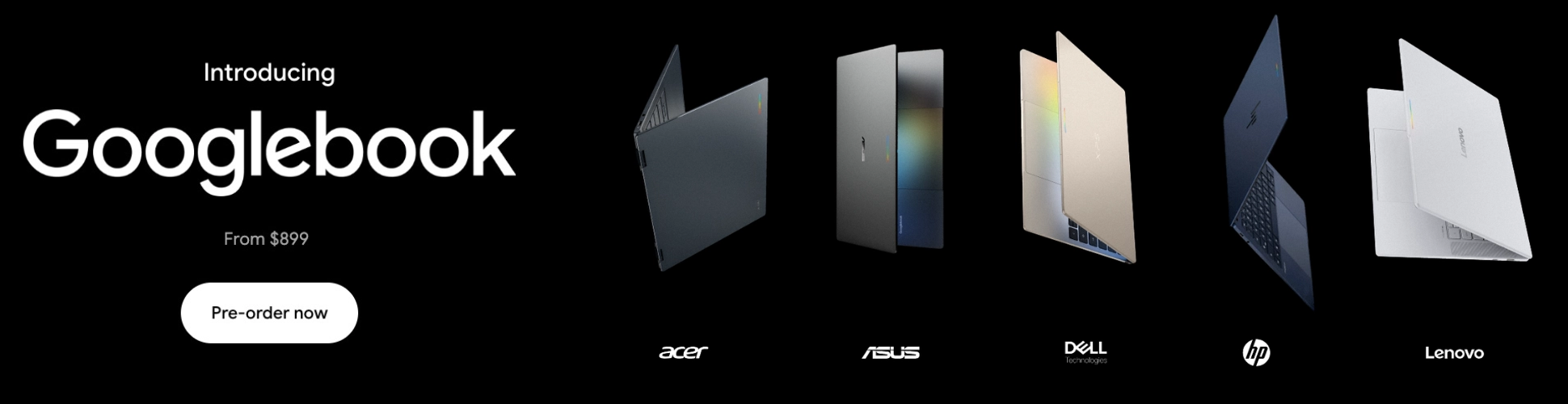
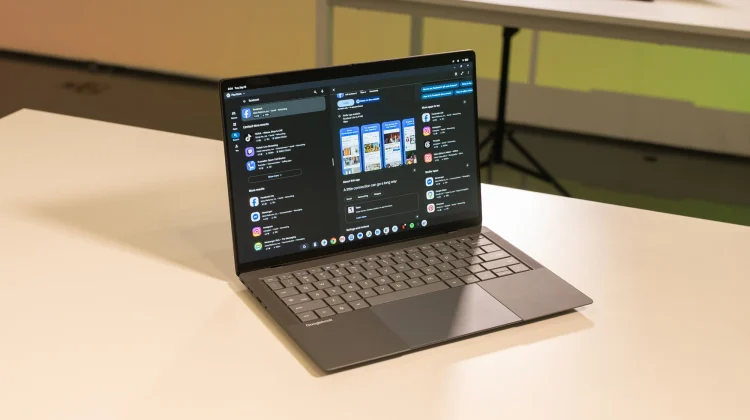
Google noted that because many Android applications were originally built for ARM processors, a small handful of complex apps and games will require developer tuning to run their best on Intel silicon. This immediately raised alarm bells for buyers looking at premium machines like the new ASUS Googlebook 14 or the Lenovo Googlebook 15, wondering if they were buying into a compromised software experience.
However, Google quickly followed up with some reassuring statistics. In a clarification sent to 9to5Google, the company stated that 96.6% of the top 10,000 most-used Android applications on Google Play work “flawlessly” on Intel-powered Googlebooks.
Google also stressed that the system isn’t using clunky 32-bit x86 emulation; instead, it relies on a highly advanced binary translation layer that dynamically compiles 64-bit ARM code directly into native 64-bit Intel instructions. According to Google, the apps that do fail on Googlebook are usually breaking because they lack large-screen support or require hardware the laptops don’t have, like gyroscopes.
Intel pushes back
While Google’s 96.6% statistic sounds great, Intel apparently wasn’t thrilled with the narrative that its chips require extra “developer tuning” for complex apps.
In a statement to Gizmodo, Intel fired back, explicitly pointing to its Intel Bridge Technology. Intel clarified that this post-compiler translation layer removes the heavy overhead of a virtualized runtime environment.
Intel also stated that their expectation is for users to experience strong application compatibility alongside fast, responsive performance, leaning heavily on their deep optimization work across the Android framework. Essentially, Intel is saying: Our translation tech is rock solid, and users won’t notice a difference.
The reality for buyers right now
Seeing two massive tech partners publicly contradicting each other in week one isn’t a great look, especially when we are already seeing other issues like major games throwing emulator flags on Googlebook hardware.
The truth likely sits somewhere in the middle. For everyday Android applications – streaming media, productivity tools, and social apps – Intel’s translation layer combined with Google’s OS optimizations will almost certainly run flawlessly.
But for heavy, graphically intense 3D games or deeply complex Android utilities built explicitly for Snapdragon mobile chips, early adopters might still face some friction on Intel machines until developers push out targeted updates specifically for Googlebook users. We will be putting our Intel-powered Googlebooks through all sorts of tests in the coming weeks, and I have to say that I’m not terribly concerned that Intel devices are going to have any significant issues. Stay tuned.
SUBSCRIBE TO UPSTREAM
Get Chrome Unboxed delivered straight to your inbox
Upstream is our flagship, curated newsletter with the top stories, most click-worthy deals, giveaways, and trending articles from Chrome Unboxed sent directly to your inbox a few times a week. Join 31,000+ subscribers.

