
Support our independent tech coverage. Chrome Unboxed is written by real people, for real people—not search algorithms. Join Chrome Unboxed Plus for just $2 a month to get an ad-free experience, access to our private Discord, and more. Learn more about membership here.
START FREE TRIAL (MONTHLY)START FREE TRIAL (ANNUAL)
For the better part of a decade, the experience of booting up a Chromebook has been pretty uniform. Regardless of whether you spent $200 on a plastic clamshell or $1,000 on a premium convertible, the startup screen was always the same: a white or black background with the “ChromeOS” or “Chromebook Plus” logo front and center. It was a visual reminder of Google’s tight grip on the software experience, ensuring that every device felt like a Chromebook first and an OEM product second.
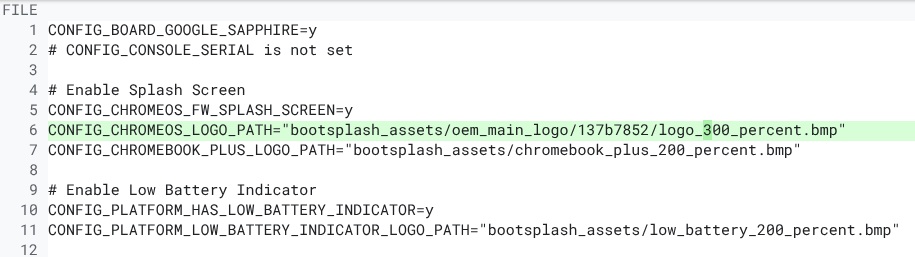
However, a string of new commits in the Chromium repositories for the upcoming ‘Aluminium’ devices like ‘Sapphire’, ‘Ruby’, and ‘Moonstone’ suggests that this long-standing way of doing things may be coming to an end. As we’ve seen in the code changes for numerous ‘Aluminium’ devices in development, Google is paving the way for OEM logos to appear on the boot screen during the startup process.
Shifting toward the Android model
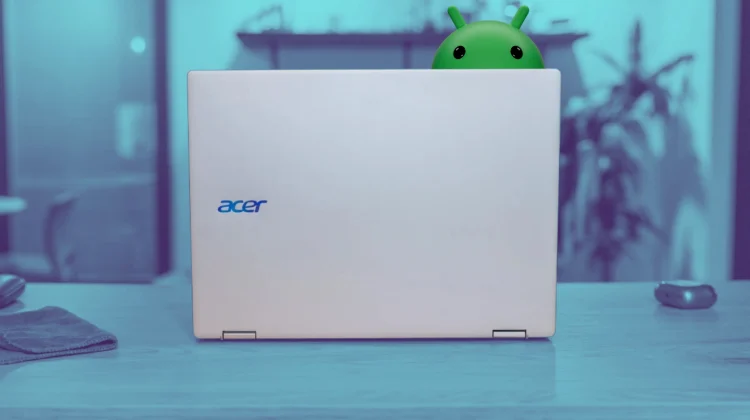
This might seem like a minor aesthetic tweak, but in the context of Project ‘Aluminium’, it feels like a deliberate move toward the Android playbook. When you power on a Samsung Galaxy or a OnePlus phone, you aren’t just greeted by an Android logo; you see the manufacturer’s branding loud and clear. It’s a signal of ownership and identity that has, until now, been largely absent from the Chromebook ecosystem.
By allowing companies like HP, Lenovo, or ASUS to put their own branding on the boot screen, Google is acknowledging these devices as distinct products from their respective manufacturers rather than simply generic vessels for ChromeOS. It’s a subtle but important shift in how the relationship between the OS and the hardware is presented to the user.
Customization vs. Fragmentation
The real question is whether this branding is just small change or more like the tip of the iceberg. In the Android world, OEM branding is usually accompanied by varying degrees of software customization. For instance, while a Pixel and a Galaxy both run Android, the user experience can feel quite different due to custom UI, unique features, and different default apps.
If ‘Aluminium’ represents a future where ChromeOS and Android are more deeply unified, it’s not a stretch to wonder if OEMs will eventually be granted more control over the software experience. Could we see a Lenovo-specific “skin” for the ChromeOS shelf, or HP-exclusive productivity tools baked into the OS?
While this would allow for more variety and innovation from hardware partners, it also raises the ever-present question of fragmentation: something ChromeOS has successfully avoided since its inception. One of the platform’s greatest strengths has been its consistency and the guarantee of fast, on-time direct updates from Google. If OEMs start pulling the levers on the software, that consistency could start to decline.
A hunch, not a headline
At this stage, this is more of a hunch than a confirmed roadmap. A logo on a boot screen doesn’t automatically mean we are headed for a fragmented future, but it is an interesting departure from Google’s historically rigid stance on the ChromeOS brand.
As we move closer to seeing ‘Sapphire’, ‘Ruby’ and others in the flesh, we’ll be watching closely to see if this OEM identity extends past the boot splash and into the OS itself. For now, it’s just another piece of the ‘Aluminium’ puzzle that suggests the next generation of Google-powered laptops might look and feel a little different than the ones we’ve grown used to.
SUBSCRIBE TO UPSTREAM
Get Chrome Unboxed delivered straight to your inbox
Upstream is our flagship, curated newsletter with the top stories, most click-worthy deals, giveaways, and trending articles from Chrome Unboxed sent directly to your inbox a few times a week. Join 31,000+ subscribers.

