
Support our independent tech coverage. Chrome Unboxed is written by real people, for real people—not search algorithms. Join Chrome Unboxed Plus for just $2 a month to get an ad-free experience, access to our private Discord, and more. Learn more about membership here.
START FREE TRIAL (MONTHLY)START FREE TRIAL (ANNUAL)
For months, I’ve been tracking a growing family of upcoming Chromebooks codenamed ‘Skywalker.’ We’ve seen a flood of these devices hitting the repositories with names like ‘Luuke’, ‘Yoda’, and the recently discovered ‘Dooku’. But if I’m being honest, I haven’t been that excited about them.
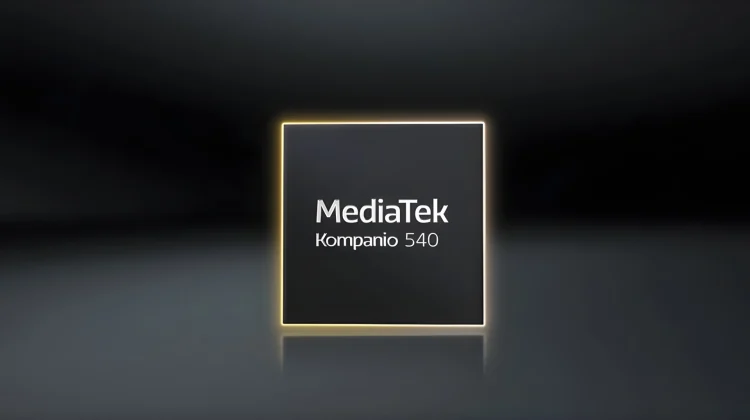
Why? Because they are powered by the MediaTek Kompanio 540 (MT8189). In my head, that 500-series label meant we were looking at a sequel to the Kompanio 520 – a chip that is fine for a $139 deal, but ultimately sits in the “very mediocre” category when it comes to performance.
But as I put the Lenovo Chromebook Duet 11” back in my bag this week, something clicked. I started looking at the specs of the Kompanio 838 inside the Duet and compared them to the Kompanio 540. After doing some quick research on posts I’ve already written in the past, t turns out I was completely wrong about the 540.
Misleading branding by MediaTek
In my defense, the Kompanio 540 branding is incredibly misleading. When you look at the data sheets, the Kompanio 540 isn’t a slightly better 520; it’s almost a carbon copy of the much more powerful Kompanio 838. Again, I knew this before today, but somehow forgot.
Both chips feature the exact same CPU configuration: two high-performance Cortex-A78 cores clocked at 2.6GHz and six efficiency cores. They both utilize a 6nm process, support the same high-end internal and external display resolutions, and feature the same upgraded NPU for AI tasks.
Here is why that matters: The Lenovo Duet 11” is a device I’ve called incredibly capable and I still stand by that. It handles 120Hz external monitors, multiple desks, and heavy workflows without breaking a sweat, all while delivering 10+ hours of battery life. By realizing the Kompanio 540 is essentially that same silicon, my outlook on the ‘Skywalker’ family has shifted from moderate boredom to intense interest.
Raising the floor for student devices
While I’m personally stoked to see how this SoC performs in a tablet like the upcoming ASUS CM32 Detachable (debuted at CES 2026), the real story here is the sheer volume of these devices. We’ve already found at least 11 ‘Skywalker’ devices in development and I have a sneaking suspicion there are even more.
The majority of these will likely end up in the hands of students as school-issued Chromebooks. For years, the student experience has been defined by just-enough performance. If the Kompanio 540 becomes the new standard for the classroom, students are about to get a massive upgrade. We’re talking about top-notch levels of battery life paired with performance that can actually keep up with modern web tools and multitasking.
I’m officially excited
It isn’t often that I’m happy to be wrong, but this is one of those times. The MediaTek Kompanio 540 is an impressive chip hiding behind a budget nameplate. Whether it’s a consumer tablet or a rugged classroom clamshell, any device carrying this SoC is going to punch way above its weight class. The ‘Skywalker’ fleet is coming, and thanks to this realization, I can’t wait for them to get here.
SUBSCRIBE TO UPSTREAM
Get Chrome Unboxed delivered straight to your inbox
Upstream is our flagship, curated newsletter with the top stories, most click-worthy deals, giveaways, and trending articles from Chrome Unboxed sent directly to your inbox a few times a week. Join 31,000+ subscribers.

