
Support our independent tech coverage. Chrome Unboxed is written by real people, for real people—not search algorithms. Join Chrome Unboxed Plus for just $2 a month to get an ad-free experience, access to our private Discord, and more. Learn more about membership here.
START FREE TRIAL (MONTHLY)START FREE TRIAL (ANNUAL)
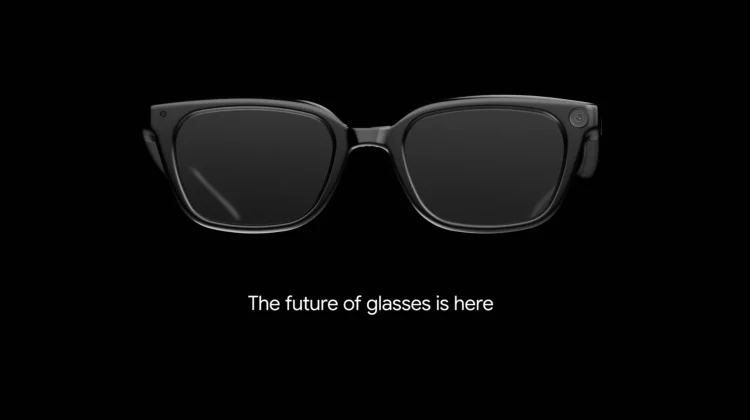
Pre-orders for Google’s highly anticipated Intelligent Eyewear are officially live. Made in collaboration with Samsung, Warby Parker, and Gentle Monster, these Gemini-powered smart glasses are slated to hit store shelves on December 10th and mark the final piece of the Android XR puzzle.
If you go back to the Galaxy S25 Unpacked event, amidst the whirlwind of the new phones and the Project Moohan VR headset tease, there was one slide that caught my eye: a timeline showing Samsung AR glasses. I wrote back then that while bulky headsets grab the spotlight, AR glasses could be the true gateway to a new era of computing.
Then, when the $1799 Samsung Galaxy XR launched, it confirmed my suspicions. That headset felt like a lighthouse device; a necessary piece of premium hardware meant to attract developers and showcase the Android XR platform.
But the real goal of spatial computing was always going to be lightweight, stylish AR glasses that seamlessly blend into our daily lives, unlike isolating headsets like the Meta Quest or Apple Vision Pro that are largely confined to home use. Fast forward to today, and that vision has officially arrived.
The Hardware: Fashion First
If there is one thing Google and Samsung absolutely nailed here, it is the form factor. By partnering with established optical and fashion brands, these actually look and feel like real glasses you want to wear around. The Warby Parker frames start at $395, and the Gentle Monster designs start at $449. Early testers and the broader community have been praising the fact that they offer true prescription options and don’t look like clunky tech gadgets.

At roughly 41 grams, they are incredibly lightweight and should be comfortable for all-day wear. You also get an impressive 9 hours of battery life, paired with a sleek charging case that holds up to seven extra charges. And it’s worth noting that these function strictly as audio-and-camera AI devices rather than true augmented reality specs with digital overlays.
The Google ecosystem advantage
But the real advantage here is the Google ecosystem. Unlike the Meta Ray-Bans—which have carved out a successful niche primarily around point-of-view content capture and social media sharing—Google and Samsung’s Intelligent Eyewear is built to function as a seamless extension of your existing digital life. Because these glasses tie directly into the Google ecosystem, they act as a hands-free bridge to the apps you already rely on every day.

You can glance at an event poster on the street and instantly ask Gemini to check your Google Calendar availability on the spot, or have the assistant summarize missed emails in Gmail and read back your latest Google Messages while your hands are full running errands. When you are exploring a new city, Google Maps leverages the onboard sensors to know exactly which way you are facing, delivering highly accurate, turn-by-turn walking directions directly into the custom-tuned open-ear speakers.
Beyond just keeping you connected to your inbox and calendar, the contextual Gemini applications are genuinely impressive. You can look at a confusing stack of city parking signs and simply ask if you can legally park there, or have Google Translate whisper real-time translations into your ear while you converse with someone in another language. Whether you are using voice commands to snap a photo and remove background clutter via Google’s Nano Banana tool, or you are identifying historical landmarks without ever pulling your phone out of your pocket, the hardware works in perfect tandem with the software to keep your eyes up and your day moving.
The elephant in the room: Privacy
Of course, this is cutting-edge stuff, and developing such technology is no easy feat. We have been tracking this journey since Google first teased Project Iris back in 2022 and Qualcomm hinted at new chips in 2024. But as spatial computing matures and these devices hit the streets, we have to address the elephant in the room: these are conspicuous smart glasses that can record at any time.
Yes, people have their phones in their pockets and can film anything at a moment’s notice, but glasses are fundamentally different. You could easily be filming things without anyone noticing, and in the wake of heavy public backlash against “secret recording” devices, that is a massive hurdle for mass adoption. Anyone remember the “Glasshole” saga back around 2013?
To their credit, Google and Samsung have clearly tried to get ahead of the curve. The glasses feature a tamper-resistant LED indicator light that illuminates when you are recording, wear-detection sensors that disable the camera when the glasses are taken off, and the deliberate omission of live-streaming capabilities. Every pair also features a physical off switch, and Google has explicitly confirmed that the camera visuals are not saved in your Gemini History or used to train AI models. And while that brings a level of cautious optimism, general skepticism toward big-tech data retention still lingers.
At the end of the day, I’m still very interested in these glasses and hope to get my hands on a pair very soon! But what do you think? Are you planning to pre-order a pair before the December 10 launch, or are you holding off? Let’s talk about it down in the comments.
SUBSCRIBE TO UPSTREAM
Get Chrome Unboxed delivered straight to your inbox
Upstream is our flagship, curated newsletter with the top stories, most click-worthy deals, giveaways, and trending articles from Chrome Unboxed sent directly to your inbox a few times a week. Join 31,000+ subscribers.

