
Support our independent tech coverage. Chrome Unboxed is written by real people, for real people—not search algorithms. Join Chrome Unboxed Plus for just $2 a month to get an ad-free experience, access to our private Discord, and more. Learn more about membership here.
START FREE TRIAL (MONTHLY)START FREE TRIAL (ANNUAL)
Just over a month into the official arrival of Googlebook OS, Google is already rolling out its another substantial software update. As we’ve talked about before, jumping onto a brand-new desktop platform built on Android 17 meant early adopters were going to run into some rough edges. Launching a whole new OS is a massive undertaking, and while the hardware out of the gate has been remarkably premium, there were definitely a handful of odd quirks, display glitches, and audio hitches that needed immediate attention.
Google clearly wasn’t sitting on its hands. Detailed in an official post over on the Googlebook Help Community, the November update brings 31 targeted bug fixes, firmware improvements, and system polish across the board.
And honestly? This is exactly the kind of fast-turnaround support we wanted to see. Rather than waiting around for quarterly feature drops to address daily frustrations, Google is tackling core usability very quickly.
Smoothing out the everyday desktop experience
Some of the most frustrating bugs in early software aren’t the dramatic system crashes; they’re the tiny interaction hitches you encounter twenty times a day. Near the top of the changelog is a fix for the lock screen where keystrokes wouldn’t consistently register when entering a PIN or password right after opening the lid or waking the machine from sleep. Missing your first two password characters every time you sit down at your laptop gets old fast, so having that wake-to-type responsiveness ironed out is huge.
Google also addressed a few lingering desktop interface oddities. The Files app no longer throws an unnecessary pop-up notification when simply copying files internally, and a bug that caused the Wallpaper & Style picker to hang or crash while browsing backgrounds has been resolved.
Over in system settings, “Tips & support” now properly redirects straight to the official Googlebook Help Center, and physical attached keyboards are cleanly labeled as “Built in Keyboard” rather than generic input strings.
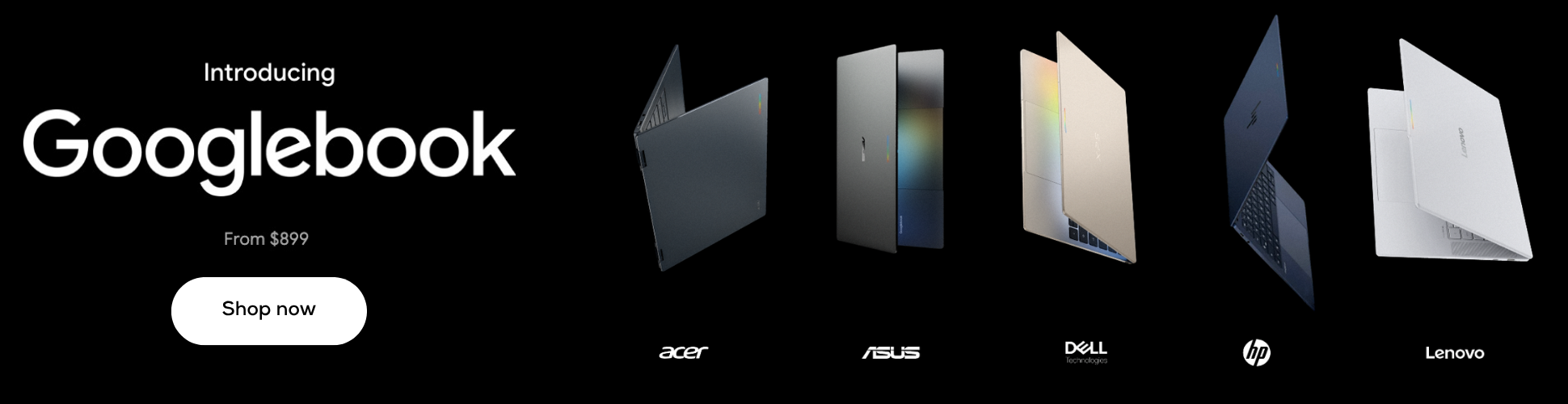
There are also a couple of welcome hardware-specific hardware tweaks: the Acer Googlebook 14 gets a fix for sluggish keyboard and trackpad re-engagement when flipping back from tent or tablet mode into standard clamshell, while the Dell XPS Googlebook 13 sees general touch responsiveness and accuracy tightened up.
Multi-monitor stability and real fixes for creators and audio gear
If you use your laptop docked at a desk with external displays, this update will feel like night and day. Dual-monitor setups had an annoying issue where unplugging external screens could cause the desktop wallpaper to stretch awkwardly over the built-in panel or completely swallow the taskbar and app icons. That’s now patched. Furthermore, users on the HP Googlebook 14 and Dell XPS Googlebook 13 were dealing with severe display driver crashes when disconnecting USB-C docks or DisplayPort daisy-chain (MST) monitors—sometimes triggering an outright reboot.
External display media playback gets major love on those HP and Dell machines, too. Previously, firing up protected DRM video (like Netflix) on an external display could lead to a black screen while audio kept playing, or cut the screen black if you paused playback for longer than five seconds.
There was also an odd HDR/HLG bug causing 60 FPS video in indoor lighting to dim the backlight while oversaturating UI colors and flickering. Both are addressed here, alongside kernel-level updates to Linux 6.12 that bring Multi-Stream DisplayPort HDCP 1.x support and display suspend watchdog crash fixes.
On the audio front, creators and remote workers get some much-needed relief. USB audio interfaces and microphones – including staples like the Focusrite Scarlett series and Elgato Wave mics – no longer suffer from an audio buffering glitch that could silently kill input recording.
Bluetooth Low Energy mice will now reliably reconnect automatically on reboot, and Bluetooth earbuds and headphones on HP and Dell models have had their audio routing patched to eliminate noticeable video-to-audio lip-sync lag when watching YouTube or streaming. For accessibility, BLE (ASHA) hearing aids will now correctly route system audio instead of defaulting back to laptop speakers.
Under-the-hood horsepower and Linux Terminal refinements
Beneath the surface, Google touched up resource management across the board. Heavy browser workloads with dozens of open tabs should see better memory stability, background Wi-Fi handling has been shored up, and the on-device AI memory footprint has been optimized to improve overall multitasking headroom on 16GB configurations (specifically benefiting machines like the Acer, ASUS, and Lenovo models).
HP and Dell models also received a critical boot firmware patch preventing devices from falling back to factory boot states and rebooting unexpectedly during idle periods. And for developers leaning into the built-in Linux Terminal (BETA), there is a long list of welcome polish:
- Persistent sessions: Linux shell sessions now stay connected when waking the device from sleep or switching back and forth between active tabs.
- Port forwarding stability: Forwarded TCP ports, including local SSH on port 2222, remain stable during rapid process churn.
- Accidental tab closures: Clicking an inactive terminal tab no longer accidentally closes it or kills background Linux VM processes.
- Seamless updates: System updates now refresh Linux VM configuration files in-place without wiping user storage or clobbering custom
openssh-serverconfigurations. - Diagnostic privacy: Keystrokes and console outputs typed inside the Linux Terminal are now strictly blocked from ever writing to system diagnostic logs.
All told, this is a hefty, confidence-inspiring update for Googlebook OS. While we’re still eager to see broader desktop workflow advancements down the line – especially when it comes to more versatile Virtual Desk capabilities – seeing the engineering team immediately squash over 30 foundational hardware and UI bugs shows Google is treating this platform with the urgency it deserves. The update is rolling out over the air now, so head into your device settings to pull it down.
SUBSCRIBE TO UPSTREAM
Get Chrome Unboxed delivered straight to your inbox
Upstream is our flagship, curated newsletter with the top stories, most click-worthy deals, giveaways, and trending articles from Chrome Unboxed sent directly to your inbox a few times a week. Join 31,000+ subscribers.

