
Support our independent tech coverage. Chrome Unboxed is written by real people, for real people—not search algorithms. Join Chrome Unboxed Plus for just $2 a month to get an ad-free experience, access to our private Discord, and more. Learn more about membership here.
START FREE TRIAL (MONTHLY)START FREE TRIAL (ANNUAL)
For months, I’ve been tracking ‘Sapphire’ – the high-end, MediaTek Kompanio Ultra-powered tablet that looks destined to be the poster child for Google’s upcoming Android/ChromeOS merger (known internally as the “Aluminium” project). But while ‘Sapphire’ has been soaking up all the spotlight, a new player has emerged in the Chromium repositories. Code named ‘Ruby’, this is the first Intel-based Chromebook that looks ready to join ‘Sapphire’ as the torch-bearers for Google’s upcoming ‘Aluminium’ project.
Just like ‘Sapphire’, ‘Ruby’ isn’t your average development board. It is part of the ‘Fatcat’ family, which we know is the foundation for Intel’s next-generation Panther Lake silicon. But the technical specs aren’t what have me excited this morning; it’s a specific hardware addition that serves as a clear signal for Google’s new, upcoming premium hardware ambitions.
Hello Pixel Light Bar
The most compelling evidence for ‘Ruby’s’ flagship status is the inclusion of a 4-color LED light bar in its configuration files. This isn’t just a generic indicator light; the code points to the same iconic, full-spectrum light strip once found on the original Chromebook Pixel devices and also present in ‘Sapphire’.
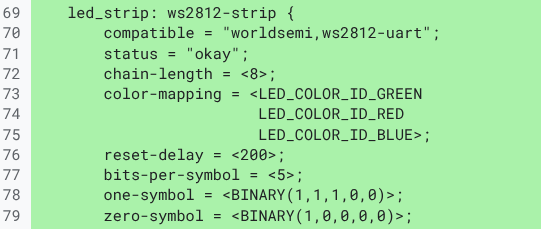
In the world of ChromeOS, the multi-color light bar has generally been reserved for Google’s own in-house hardware (or hardware that is heavily influenced by them). Finding it on ‘Ruby’ (just as it is on ‘Sapphire’) strongly suggests that Google is working closely with OEMs on at least a coordinated pair of flagship devices to launch its new unified OS.
Intel’s ‘Aluminium’ powerhouse?
While ‘Sapphire’ represents the thin-and-light, detachable, high-efficiency ARM side of the coin, ‘Ruby’ could be a more powerful beast. Based on the Intel Panther Lake architecture, ‘Ruby’ will likely leverage the massive AI performance gains of the Core Ultra Series 3 processors. With NPUs capable of up to 50 TOPS (and 170 TOPS when combined with the GPU), ‘Ruby’ is the perfect vehicle for the “AI-first” vision of Google’s ‘Aluminium’ project.
This plan to transition ChromeOS to the Android kernel requires hardware that can handle intense, on-device AI tasks while providing a “Pro” level experience. If ‘Aluminium’ devices are going to compete with the MacBook Pro or the highest-end Windows Copilot+ PCs, it needs an Intel flagship that doesn’t compromise. ‘Ruby’ looks to be exactly that.
What’s next?
We are still in the early days of ‘Ruby’s’ development, but not so much so when it comes to ‘Fatcat’ (the parent baseboard). ‘Fatcat’ has been in the works for well over a year at this point, so ‘Ruby’ has a substantial base to start from. A 6-8 development month cycle makes a lot of sense here, and ‘Ruby’s emergence in September of 2025 could 100% make way for a Q2 2026 product launch.
I’ll be watching ‘Ruby’ in the repositories like a hawk to see what other pro features like fingerprint scanners, high-refresh-rate displays, or haptic trackpads start to appear. But one thing is very clear right now: the era of boring Chromebooks is coming to an end. Whether you prefer the efficiency of ARM or the raw power of Intel, Google is preparing something special to truly kick off the ‘Aluminium’ era.
SUBSCRIBE TO UPSTREAM
Get Chrome Unboxed delivered straight to your inbox
Upstream is our flagship, curated newsletter with the top stories, most click-worthy deals, giveaways, and trending articles from Chrome Unboxed sent directly to your inbox a few times a week. Join 31,000+ subscribers.

