Support our independent tech coverage. Chrome Unboxed is written by real people, for real people—not search algorithms. Join Chrome Unboxed Plus for just $2 a month to get an ad-free experience, access to our private Discord, and more. Learn more about membership here.
START FREE TRIAL (MONTHLY)START FREE TRIAL (ANNUAL)
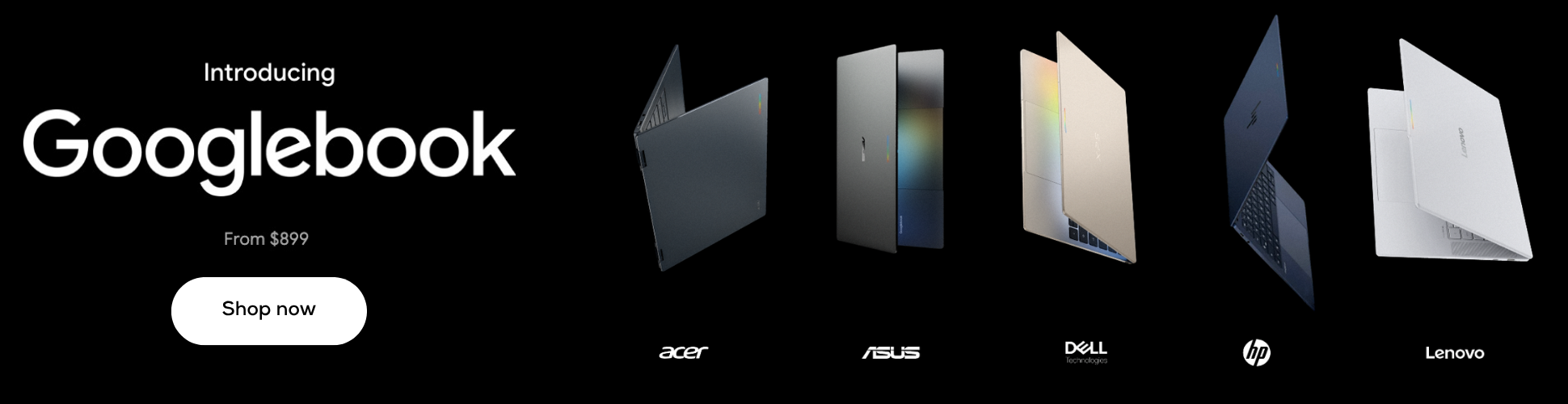
If you’ve spent any time reading or watching what we do around here lately, you know the arrival of Googlebook OS has fundamentally shifted how we look at desktop computing in Google’s ecosystem. Moving away from ChromeOS to an Android 17 foundation has brought its fair share of adjustments, but it also opened up a whole new world of architectural flexibility.
At the exact same time, wearable displays are finally starting to shed the clunky, ski mask feel of past generations. Devices like the new XReal Aura are landing, and with Android XR gaining real momentum across hardware makers over the next year or so, spatial computing is steadily moving out of heavy headsets and into lightweight glasses you could actually see yourself wearing on a daily basis. Looking at where both of these form factors are heading, Google has an incredible opportunity to make them work together in some pretty incredible ways.
The natural advantage of a shared Android foundation
From a foundational perspective, Googlebook OS changes the playing field. Because Googlebooks and the incoming wave of Android XR glasses share the exact same Android tech stack, the wall between the two platforms largely disappears. Instead of basic display mirroring, Google has the framework to build a native handoff – sharing spatial awareness, system audio, and window management seamlessly over a single USB-C cable or low-latency wireless connection.
When both devices on opposite ends of a cable speak the same basic language, what applications can do between the two gets far less constricted and the window opens wide for new, creative use cases for users leveraging Gogolebook OS and Android XR.
Sprawling multi-window productivity in any coffee shop or airplane
Don’t get me wrong: a sharp 14- or 15-inch laptop screen is great for getting through routine daily tasks, but serious workflow management almost always demands more screen real estate. The dilemma has always been portability – nobody wants to haul portable flat-panel monitors around town or through airport security.
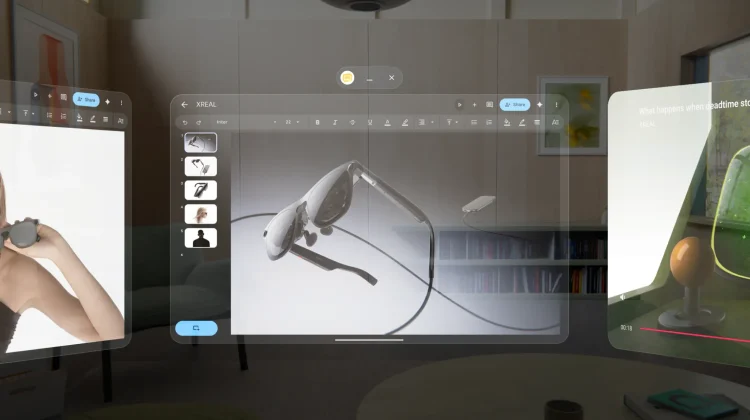
This is where pairing Android XR glasses with a Googlebook turns into a massive workflow upgrade. Slip on a pair of glasses like the XReal Aura while sitting in a cramped airplane seat or at a tiny coffee shop table, plug into your Googlebook, and your physical display instantly expands into a private, multi-screen virtual workstation. You can keep your primary browser window dead ahead, pin your chat apps or email off to one side, and let your reference notes hover comfortably on the other.
Because Googlebook OS handles Android apps natively, that virtual setup benefits directly from the local compute, battery life, and physical keyboard and trackpad of the machine sitting in front of you. Plus, your entire workflow stays completely private from whoever happens to be sitting in the seat next to you.
A personal theater and entertainment hub anywhere you go
Beyond getting work done, the combination of lightweight XR hardware and Googlebook OS makes for an unmatched portable media setup. Whether you’re streaming a 4K movie on Netflix, catching up on YouTube subscriptions, or firing up a quick gaming session through GeForce NOW with a Bluetooth controller, you aren’t constrained to the dimensions of a laptop lid.
Instead, you get a virtual, cinema-sized canvas floating in front of you with spatial audio directly at your ears. For long flights, hotel rooms, or just relaxing on the couch without commandeering the living room TV, it transforms the Googlebook into an effortless media hub. And because it’s running native Android media pipelines, HDR video rendering and spatial window anchoring feel snappy and intuitive rather than feeling like a piped video feed.
The ecosystem play I hope Google gets right
Google has already shown real intent when it comes to ecosystem cohesion with features like phone streaming and quick pairing. But as Android XR glasses become thinner, lighter, and more common over the next couple years, treating them merely as external display mirrors would be leaving immense value on the table.
The pieces are already in place: a common operating foundation, a massive shared catalog of Android software, and hardware that is finally slim enough for everyday carry. If Google leans in and builds deep, intentional synergy between Googlebook OS and Android XR, it won’t just make spatial displays more compelling – it will give users a very strong argument for carrying a Googlebook on a daily basis to get work done and consume content.
SUBSCRIBE TO UPSTREAM
Get Chrome Unboxed delivered straight to your inbox
Upstream is our flagship, curated newsletter with the top stories, most click-worthy deals, giveaways, and trending articles from Chrome Unboxed sent directly to your inbox a few times a week. Join 31,000+ subscribers.

